Agreed entirely with wig. Both Corbyn and Johnson are populists of the worst kind. Corbyn was more extreme, but Johnson is more reckless with the truth. Otherwise, both are Trump-lite.

Printable View
Agreed entirely with wig. Both Corbyn and Johnson are populists of the worst kind. Corbyn was more extreme, but Johnson is more reckless with the truth. Otherwise, both are Trump-lite.
I think up to about 2017, I might have find the level obliviousness to displayed by the above two posts charming on some level: 'yeah, that's right guys. Trump is just a one off aberration, our political and economic systems aren't fundamentally broken and corrupt, our institutions will save us from anything bad Trump or Johnson might do and everything will be fine'.
Now, it's the year of our lord 2020, the world is burning and it really isn't funny any more. Get your shit together immediately.
It's a little weird how we're still describing these people as simply being populists.
Hi, I'm Sensible Centrism and you might recognize me from many of my greatest achievements such as: the Iraq War and failed nation building effort, the 2008 Financial Crash and Subsequent Recession, Austerity, Decades of Inaction on Client Change, Rising Wealth-Inequality, Stagnant Wages, For Profit Health-care, Militarized policing, Failure to win the Brexit referendum, Failure to beat Donald Trump in An Election, Failure to Hold Trump to Account For His Rampant Criminality, Failure to Check in the infiltration of law enforcement by white supremacists groups, Blind faith in insinuations which just roll over and give up in the face of corruption by the powerful, institutional racism, Weak Responses to Covid-19 in most nations, Rampant Corporate Tax Evasion, the Erosion of Labour rights and much more and I'm here to tell you that my policies and candidates are the only credible ones.
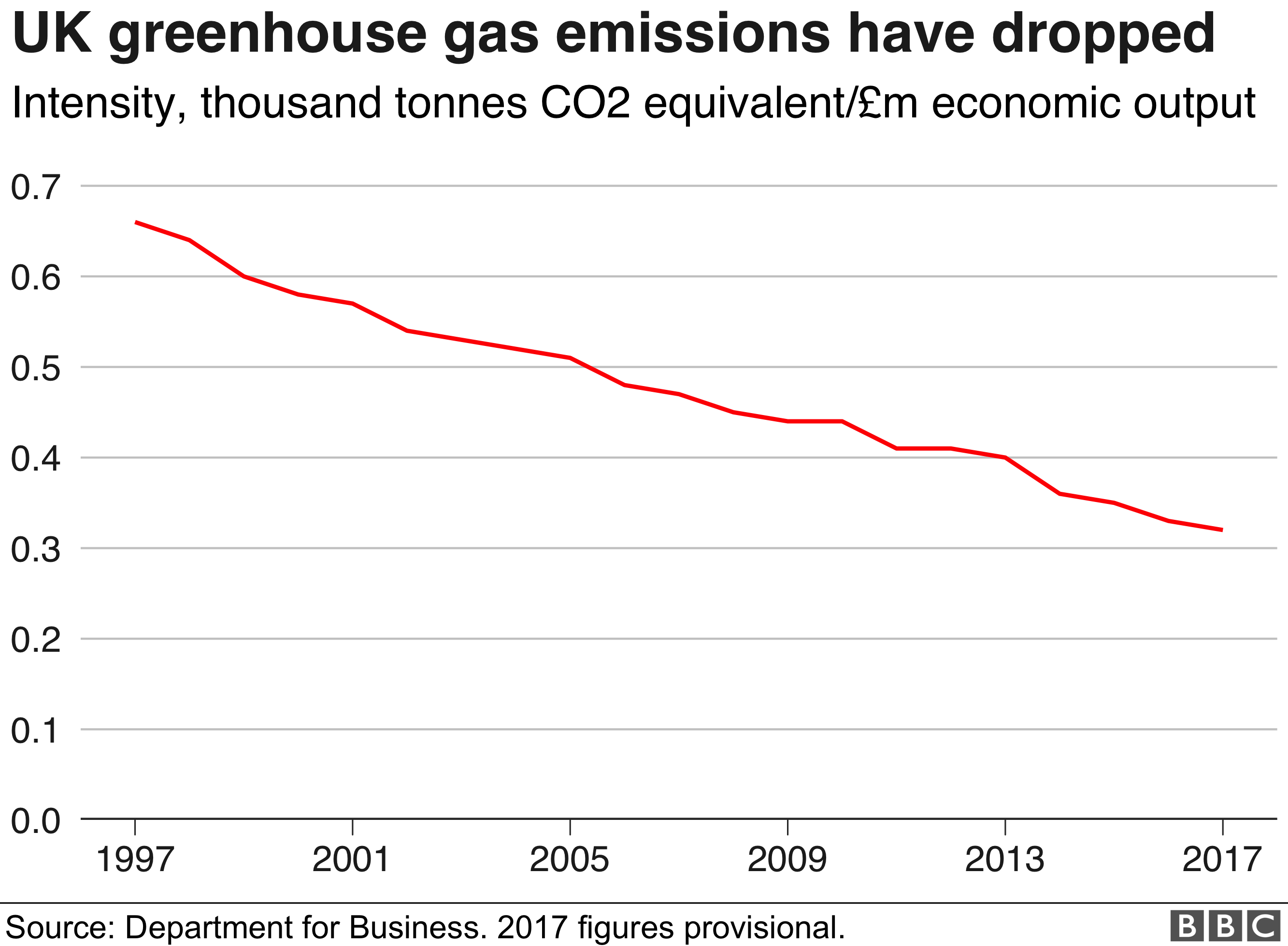
I'm guessing by inaction on client change that was a typo and you meant climate change. Of course while "centrist" Blair did nothing on climate change, with consumption CO2 rising in this country consistently until it peaked in 2007, this government of the past decade that you don't call centrist has seen a remarkable and massive drop in our consumption of CO2 within the space of a decade.
I'm guessing you mean emissions, not consumption. Consuming C02 would be good, I think?
In your eagerness to give the Tories a reach around, you have made an (understandable, on this occasion) misreading of the figures. UK emissions peaked in 2007 when you included 'imported emissions', as in when you include the figures from goods manufactured abroad but imported into the UK in our figures. Native emissions peaked in 1972 and have fallen reasonably consistently since then. It is, however, almost certainly too little too late.
I do no begrudge you this honest mistake, but I do recommend you seek professional help with your Compulsive Tory Defending Syndrome, especially as my post wasn't even aimed at them in particular.
No I mean consumption-based CO2.
Until 2007 our emissions were falling because what we were emitting domestically was falling . . . but that was a dishonest statistic and meaningless because we were simply offshoring our emissions. As all emissions join the atmosphere globally, it doesn't matter where the emissions occur what matters is what we cause to occur. The world is not improved by offshoring our production to poor standards, high-CO2 emitting factories overseas with the products then flown (more CO2) into this country. With the flown in goods then consumed domestically while we pat ourselves on the back for doing a great job reducing our global emissions when in reality our emissions have increased globally and not fallen we're simply consuming the finished goods while pretending we aren't responsible for their emissions.
That is why campaigning groups have become alert to this error in the statistics and are saying we should use consumption-based CO2 which includes our imported CO2. That is not a misreading, it is an honest reading. Unless you think imported products magically don't emit carbon?
In 2007 our CO2 Consumption figure was 110% of our 1990 figure - despite claiming to have reduced our emissions when you account properly for consumption we had increased our consumption by 10%. It dropped due to reduced consumption during the recession, rose again in 2010 but has since been falling dramatically since. Since Cameron entered Downing Street is the first time in history that consumption-based CO2 emissions have fallen in this country.
https://www.carbonbrief.org/mapped-w...ters-exporters
Yes, but you're trying to make out like this is somehow a result of government policy rather than emissions also falling (or leveling off) in countries we import from.
It is a result of government policy. Domestic emissions have fallen off a cliff as we've gone from 80% of our domestic energy coming from coal in 2010 (2% from renewables) . . . to now nothing at all coming from coal and more from renewables than anything else. Plus the government and smart campaigners have realised that offshoring emissions is not a solution. Shutting down domestic factories which are using cleaner energy and offshoring to dirty coal powered factories overseas is no longer being encouraged as much via the tax system.
What are you talking about? Domestic emissions have no 'fallen off a cliff', they've continued their slow decline they've been on for ages:
Also,
Britain now G7's biggest net importer of CO2 emissions per capita, says ONS
You're misreading the data.
The percentage decline has greatly increased in the past decade.
Steely, I'm not really sure I understand how this post is a meaningful response to what I wrote. I'm not trying to pick sides here; I think that Johnson's premiership has been very bad indeed for the UK, but I frankly think that a Corbyn one would also have been awful, albeit in different ways. I don't know who I would have voted for if I was a citizen of the UK, but I would have been holding my nose while doing it (for that matter, I had some uncertainty about Trump v. Sanders back in early 2016, but I think I would have ended up backing Sanders down the stretch just because of the truly batshit stuff that Trump did during that period).Quote:
Originally Posted by Steely Glint
I think I have been crystal clear since well before he was elected that I think Trump is dangerous and corrosive and not even remotely fit for office. I think there's ample evidence to justify his removal from office. Just because I haven't been scare-mongering about every single thing his administration does that concerns me doesn't mean that I think his presidency is an aberration. Trump is a symptom, albeit a pretty awful one. But I'm not sure what bearing that has on my feelings about Johnson and Corbyn. I presume that you feel that Johnson is apocalyptically bad while Corbyn might be at best distasteful, thus making my approximate equivalence of the two (with Trump no less) baffling to you. We won't ever know how a Corbyn premiership would have turned out, but based on his performance as party head it would have been pretty fucking awful.
Not really sure what part you're disagreeing with. Neither one of us claimed Trump is a one off aberration. I, for one, don't see institutions saving us. Things won't be fine. But Corbyn was still a populist and a terrorist supporter who was active in stifling dissent within his own party (to say nothing of allowing anti-Semitism). If I had British citizenship, I would have voted Lib Dem. Forced to choose between Johnson and Corbyn, I'd probably have to go with Corbyn because he was more likely to take a sane position on Brexit (it wouldn't be a good position, but a better one than Johnson).Quote:
Originally Posted by Steely Glint
You're correct, sorry. The UK's c/02 emissions have decreased by 50% since approximately 2010, largely by removing coal from the energy mix.Quote:
Originally Posted by RandBlade
Where do you think the next big gains are going come from?
The entire premise of your position is that the principle similarity between, and what makes them ultimately equally distasteful to you, Trump/Johnson and Corbyn/Sanders is that their policies take us away from the neo-liberal status consensus that's been the guiding principle under which most western nations have been run since the 1980s. They are aberrant from the default and therefore in your eyes, not 'sane'.Quote:
Originally Posted by wiggin
But it is this neo-liberal consensus itself that is the whole fucking problem. And Trump is the logical endpoint of it, not an aberration. And the next Trump will be worse.
Before we go any further, can you do me a favour and define what you mean when you say 'populist'? It's a somewhat loaded word and can mean different things depending on who is using it.Quote:
Originally Posted by Loki
Someone accusing the "elite" of conspiring to keep the common man down and demanding a weakening or dismantling of all institutions (the media, political parties, the judiciary, international organizations where applicable) that can serve as a check on their "fixing" that problem. Purging the Labour Party, seeking to leave the EU (which Corbyn has pushed for years), attacks against the media, etc. are certainly indicators of populism.Quote:
Originally Posted by Steely Glint
Furthermore, populist leaders tend to have some traits - lack of issue knowledge, proneness to lying, relying on unqualified advisors - that aren't part of populism per se, but correlate strongly with leaders more concerned about destroying the "elite" than with governance.
Steely, before I get into the substance of your comments, I just wanted to applaud this:
You disagree with RB about a whole heck of a lot, but when you were presented with data that contradicted what you had been saying, you actually looked at it, re-evaluated your position, and apologized. This is how all of us should behave in an argument. Thanks.Quote:
Originally Posted by Steely Glint
I know that you and I are going to have to agree to disagree at some point in this discussion, but I'd like to explore this a bit more first. I think that what you find problematic in what I said was that you were seeing my comments as arguing that Corbyn and Johnson are similar or 'equally distasteful'. That's not really what I meant to say. I think that Corbyn and Johnson are quite different, but - and here what's important - I think that both have deep deficiencies as leaders and would/have poorly served the UK in that role. Their deficiencies are distinct (I'm reminded of the Tolstoy quote about unhappy families) both from each other and from Trump. However, Trump is the Western world's current favorite leader to hold up as all that's wrong with the world (with some justice), so the comparisons between one inept leader/would-be leader and Trump are bound to occur. On a superficial level, I think it's possible to draw parallels between some of Trump's many and varied failures as a leader and elements of the approach of Johnson or Corbyn. That is not to say that the two leaders are all that alike, just that they both share some deficiencies with Trump.Quote:
The entire premise of your position is that the principle similarity between, and what makes them ultimately equally distasteful to you, Trump/Johnson and Corbyn/Sanders is that their policies take us away from the neo-liberal status consensus that's been the guiding principle under which most western nations have been run since the 1980s. They are aberrant from the default and therefore in your eyes, not 'sane'.
But it is this neo-liberal consensus itself that is the whole fucking problem. And Trump is the logical endpoint of it, not an aberration. And the next Trump will be worse.
Now, I understand that you think my distaste of Corbyn (and Johnson, and Trump!) was tied to their opposition to the 'neo-liberal consensus', but that's a pretty nebulous term. I'll assume you mean it in the general pejorative sense used in much of the social sciences to describe the trend toward more open markets, a less overt government role in the economy, trade liberalization, and globalization writ large. I don't think that people who are troubled by some of the challenges posed by current economic policy are insane; far from it. While I'd say that I'm pretty strongly in favor of some elements of the general US economic consensus (such as the relatively free flow of capital, goods, labor, and people), I recognize that there are problems that arise from the resulting dislocations, some of which are quite intransigent ones. It's hardly insane to think that there are likely better ways to structure our society and economy in order to provide for better outcomes for all, not least because of deficiencies in the efficient markets hypothesis. I do, however, think that most of the people who make the biggest noise complaining about the status quo have very little in the way of good ideas on how to address it - they build their followings out of anger at real or perceived slights, not out of thoughtful solutions.
My distaste for each of these three politicians is unique and complex, not unlike a fine wine. Johnson is a liar, a racist, a sexist, and a political opportunist with few if any principles. He builds his brand on irreverence, which might work well from the peanut gallery but plays very poorly from the most powerful position in the country - especially when you need to deal with a wildly complex nuts-and-bolts issue like Brexit. Like Trump, he somehow manages to portray himself as an everyday man lampooning the elites while simultaneously being one of the most cronyistic members of that elite (and unlike Trump, actually has a veneer of polish from a decent brain and education). His seizing of the Brexit issue for his own personal political gain - at untold cost to the country - is one of modern Britain's greatest political betrayals.
Corbyn, on the other hand, is an antisemite, conspiratorial, uncompromising, an open admirer of brutal dictators and murderous terrorists, and an awful party leader. He has built his brand on agitation for revolution without having a shred of an idea on how he'd manage things better. His career-long solidarity with figures on the left - both in Britain and internationally - who are among the worst the world has to offer shows at best exceedingly poor judgment, but more likely a deep seated blindness to criticism of himself or his compatriots (which was itself born out in the utter shambles he made out of Labour when he did gain power, and his unwillingness to accept blame for any of his many missteps). His punitive approach to internal dissent and his utter unwillingness to compromise with members of his own party boded extremely poorly for his ability to govern by consensus and compromise had he become PM. His grasp of policy is at best precarious and blinded by his preconceptions no less than a 'neoliberal' might be blinded by their faith in markets. And last but not least his not-so-closet Euroskepticism helped to bring about Brexit. If I were a British Labour supporter, I'd be furious with his mismanagement of the party, his role in the opposition, and the EU referendum.
I won't even go into Trump's failures as a president, but suffice it to say that I don't think that his approach is likely to solve any of the problems brought on by 'neoliberalism'.
What do they share in common? An unwillingness to either confront or speak the truth, an angry attack against the status quo and the institutions of civil society without providing a thoughtful alternative, intolerance of dissent, scapegoating of the 'other', encouraging the most radical and divisive elements of one's base, etc. In short, populism.
There are people whose politics I don't love who rail against the 'neoliberal consensus' (as I understand your meaning) but don't fit this mold. Elizabeth Warren, for example, did a not-too-awful job representing that role in the most recent Democratic primary (and while I don't love her politics, she is my Senator and does an okay job of it IMO). Bernie Sanders, on the other hand, is a populist rabble-rouser through and through. On the right I'd have a harder time thinking of someone who fits the bill; the likes of Ron Paul are definitely in the populist category, and while the party as a whole has shifted away from neoliberalist thinking on e.g. movement of goods and labor, the non-populist members of the party have by and large stuck by that general economic philosophy.
I'd really like to continue this discussion, if you are so inclined.
What I mean by neoliberalism is the political consensus which was established by Thatcher and Reagan which governs with the following principles:
- Deregulate markets, in the belief that government regulation makes business less efficient, and that the market will self-correct when it needs to
- privatize everything, in the belief that the market is intrinsically more efficient than government
demolish"""reform""" the welfare state, in the belief that access to benefits encourages people to be lazy and not seek work- cut back labour rights and diminish the power of unions, in the belief that doing this encourages job growth by encouraging employers to take on more staff in the knowledge that they can get rid of them easily if they don’t work out.
In the interests of brevity, I won't go into why (if anyone wants to have it out with me, do a quote reply and I will explain) but needless to say I would describe the above as, in broad terms, a massive pile of abhorrent trash that doesn't do what it says it does and that needs to fuck off into the dustbin of history with immediate effect.
In light of that, framing this as being a dispute about open vs closed markets or trade liberalism and globalization or some other bullshit is to miss the point of the objections massively.
No one gives a fuck about markets, because no one other than a very small number of people will ever see the supposed benefits. It's about capital; who owns it and where the wealth our economy generates actually goes. It's called 'capitalism', not 'marketism'.
For this reason, the kind of leaders I think people like you and Loki would like to vote for (and which Randblade has somehow convinced himself that Johnson is), these sort of vaguely technocratic, centerist figures who are socially liberal (but not too socially liberal) but still really like free markets and open trade just don't exist any more and probably won't exist again. It's a dead topic. No one cares. You might as well go on about whigs vs tories (the original ones).
Corbyn/Sanders and Trump/Brexit[Johnson] are each in their own way a direct consequence of an ideology that has done nothing but fail for 20 years. Thus, when I see people being all ‘if only we could get back to sensible leaders and not have to choose between these extremists’ it just makes me laugh, bitterly. The dumbassary of these ‘sensible leaders’ is what brought us to this sorry state to begin with.
You say people who critique the status quo have no ideas about how to address these problems. Well, let me introduce you to... the platform Sanders and Corbyn ran their respective election campaigns on? They aren't particularly radical. It's not complicated. You simply take all that stuff I mentioned above and stop doing it. The world doesn’t have to be governed exclusively with the interests of capital in mind. It’s not common sense, and it’s not some not pre-ordained, brute fact in the world. It is, in fact, quite urgent that we stop doing that.
About Corbyn, you say he is an ‘antisemite, conspiratorial, uncompromising, an open admirer of brutal dictators and murderous terrorists’. Briefly; I have never seen any convincing evidence of him being, personally, an anti-semite. I asked Randblade to provide some multiple times and he came up very short. Conspiratorial? I said back in 2016 that that year was turning me into a conspiracy theorist and I wasn’t joking. It is extremely hard to explain the current state of the world without being at least a bit conspiratorial. Uncompromising? Good. Wild how it’s always the left that’s supposed to compromise and the right never, ever moves an inch on anything and constantly gets its way. Sick of compromising with these little fuckers. Look and where it’s left us.
An open admirer of brutal dictators and murderous terrorists? Dude, wait till you find out about the entirety of post-war US/UK foreign policy. The west fucking loves brutal dictators and murderous terrorists. Sure, Corbyn sat at a table with some shitbag from Hamas or something. I don’t love it, but it’s not like he sold them a bunch of advanced weapons or used the country's intelligence apparatus to overthrow a democratically elected government to put one of them in power.
These are not true critiques, these are excuses. For example, there have been MP's making anti-semitic remarks in the Labour party since the Blair years and probably long before, just as basically any given form of bigotry has always been able to find a home in the Tory party so long as it's not spoken openly on the front benches*, yet suddenly it's a massive issue when Corbyn is prime minster?
* you hit upon the reason for this in your earlier interjection between me and Randblade.
If nobody has ever told you, you have a fantastic way with words. I do enjoy your posts.
Thank you.
https://www.google.com/publicdata/ex...l=en&ind=falseQuote:
Originally Posted by Steely Glint
https://2lffqo2moysixpyb349z0bj6-wpe.../2017/09/1.gifQuote:
Originally Posted by Loki
https://thumbor.forbes.com/thumbor/7....jpg?width=960
https://wolfstreet.com/wp-content/up...al-2019-Q4.png
https://cdn.theatlantic.com/static/m...r%20banner.jpg
https://wolfstreet.com/wp-content/up...yer-single.png
https://i2.wp.com/metro.co.uk/wp-con...80%2C523&ssl=1
https://lh4.ggpht.com/_-V659TgjNS0/S...%202008%29.jpg
https://i.guim.co.uk/img/media/61148...rmat&fit=crop&
https://i.guim.co.uk/img/media/61148...rmat&fit=crop&
https://ichef.bbci.co.uk/news/1024/b...m110516721.jpg
https://a57.foxnews.com/media2.foxne....jpg?ve=1&tl=1
https://s01.sgp1.cdn.digitaloceanspa...1590925025.jpg
Thought you might like this, Steely:
Twitter Link
https://www.lbc.co.uk/radio/presente...irus-pandemic/
Quote:
He said: "What I have seen in my constituency is that there are sections of the community that are not taking the pandemic seriously."
Ian clarified that he was talking about the Muslim community and Mr Whittaker responded: "Of course.
[...]
Again Ian clarified that he was referring to the immigrant population and the MP said: "Immigrant and Asian population."
I don't like it or agree with it but there are a lot of people online (not me) arguing that household transmission is happening more within certain communities and that Eid may be related to the decision.
I don't agree personally but it may or may not be a coincidence that banning family gatherings in increasingly infected communities came in directly before Eid.
I've got Sky News on right now, they're currently presenting from outside a Bradford Mosque, so this probably should be discussed more in the COVID thread than this. Its about COVID.
He denies that this has anything to do with Eid (in his mind), but a bigger issue is that a Tory MP can hardly be said to have any credibility when he specifically accuses BAME people specifically—and Muslims in particular—of not taking the pandemic seriously.
Why?
I agree I don't think it's right but the data does indicate it could be a major issue. In Leicester people blamed the government for issuing its warnings in English as a reason Leicester was badly effected. I have BAME friends who are saying the same things and saying that family gatherings with 30 family members in a living room is more common in the community which is a factor.
I'm not convinced but should it not be brought up ever even if it might be true?
What data are you referring too?
I'll try and find it but when Leicester went into lockdown I saw an article, I think from the Leicester Mercury, showing that the demographic of recent cases was largely in line with the national trend i.e. there was no evidence that the increase in cases were BAME.
As I said, I don't believe this and I've been arguing against it online.
Not just Leicester but the list of cities where incidence is currently higher which have gone into lockdown all correspond with cities with higher proportions of BAME communities.
But I think correlation does not equal causation.
This is the current "heatmap" of where infections are in the UK per 100,000 population, from Pillar 1 and Pillar 2 data.
https://i.imgur.com/ljWYZdv.jpg
Thanks. I can't find that article I mentioned :(
Y'know, communities of color in the US have been disproportionately impacted by COVID-19. And yet most of the rhetoric (outside of assholes) has focused on reasons for the disproportionate impact (including genetic, the higher proportion in essential jobs, the higher proportion who live or travel in circumstances where social distancing is difficult, the uneven provision of healthcare, and well-founded historic distrust of public health officials) rather than blaming minority communities and their practices for higher infection rates.
Indeed. I agree with that Wiggin.
The virus is nearly eliminated here now apart from a few communities. I don't like the idea of blaming anyone at all, but trying to identify why some communities have the virus when the rest don't is a worthy exercise. Once you understand that you can look to adjust distancing rules to reflect that, but it shouldn't be blaming people.
From where we are large multigenerational homes and large family gatherings seems to be a massive factor. I saw a SAGE scientist (independent scientist) being asked earlier why people could gather in pubs but not homes and the answer was the evidence they have is that the virus isn't spreading in pubs and that the community with the virus is catching it in homes.
Steely, I suspect this is likely to be our last back and forth on the topic, but thanks for your thoughtful reply.
You know, I'm happy you provided a definition, because that's not at all how I view neoliberalism. In particular, my framing overlaps with yours wrt market deregulation and privatization (though perhaps not in the extremes you portray), but also includes trade liberalization and globalization explicitly - after all, the term has gained a lot of currency around the ratification of NAFTA, and more broadly it's heavily associated with the Chicago School.Quote:
Originally Posted by Steely Glint
What I don't think it explicitly is connected with is a destruction of the welfare state and reduction of labor rights. True, things like the EITC in the US were influenced by neoliberalist theory (and, all things being equal, I think the EITC is one of the best tools in the US government for reducing poverty), but other more punitive cuts to welfare enacted especially in the 90s were not explicitly tied to neoliberalist theory. Similarly, it is true that many elements of neoliberalism push for a more flexible labor force - which is one of the things that really sets the US apart - and that sometimes this involves reducing the power of entrenched unions, especially in the public sector. But I'm not sure it qualifies as opposed to unions in principle.
Regardless, this may be a semantic distinction. Other than strongly arguing with your exclusion of trade liberalization, I'm willing to work with your definition.
I really disagree. In the broad sweep of history, I think that things have gotten better over time for most people, and that most of that improvement is due to the efforts of 'sensible leaders'. People who were flawed and who worked in relatively small increments, not revolutionaries (with some notable exceptions). I am deeply optimistic about the future and the ability of our increasing understanding of the world and society (and ethics) to allow for more and more people to live just, fulfilling, meaningful, and healthy lives. We have very serious problems now, agreed, and the arc of history is hardly monotonic. But overall I'd take a Barack Obama or George H. W. Bush (or a Cameron or Blair) over a Corbyn or a Johnson any day.Quote:
For this reason, the kind of leaders I think people like you and Loki would like to vote for (and which Randblade has somehow convinced himself that Johnson is), these sort of vaguely technocratic, centerist figures who are socially liberal (but not too socially liberal) but still really like free markets and open trade just don't exist any more and probably won't exist again. It's a dead topic. No one cares. You might as well go on about whigs vs tories (the original ones).
Corbyn/Sanders and Trump/Brexit[Johnson] are each in their own way a direct consequence of an ideology that has done nothing but fail for 20 years. Thus, when I see people being all ‘if only we could get back to sensible leaders and not have to choose between these extremists’ it just makes me laugh, bitterly. The dumbassary of these ‘sensible leaders’ is what brought us to this sorry state to begin with.
I have no doubt that the current inflection point in Western (and more specifically Anglo) politics reflects a confluence of factors that expose flaws in our current policy architecture. What I question is that someone like Corbyn, or Johnson, or Trump, or any other reactionary populist, is going to be an effective fix.
I am not an expert on Corbyn's positions (mostly I was more aware of his mismanagement of the party), but a few things that come to mind that were, frankly, unhelpful: proposing to print money to fund infrastructure investment, renationalizing a bunch of industries at exorbitant cost, his thinly veiled euroskepticism, pulling out of NATO... none of these are going to solve jack shit other than make some people feel better.Quote:
You say people who critique the status quo have no ideas about how to address these problems. Well, let me introduce you to... the platform Sanders and Corbyn ran their respective election campaigns on? They aren't particularly radical. It's not complicated. You simply take all that stuff I mentioned above and stop doing it. The world doesn’t have to be governed exclusively with the interests of capital in mind. It’s not common sense, and it’s not some not pre-ordained, brute fact in the world. It is, in fact, quite urgent that we stop doing that.
Similarly, Bernie Sanders' positions (with which I am far more familiar) include some rather radical changes, and not ones I think would be helpful: Politicizing the Fed, opposing TARP, opposing free trade, a 90% maximum tax bracket, taxing overseas profits immediately without switching to a territorial system, legislating giving 20% of a company to employee ownership, reinforcing Buy American provisions in legislation, a federal jobs guarantee... and a whole host of other policies that while I didn't really disagree with them (e.g. single payer healthcare), he didn't provide a realistic plan for how to pay for them.
Let's take this one by one:Quote:
About Corbyn, you say he is an ‘antisemite, conspiratorial, uncompromising, an open admirer of brutal dictators and murderous terrorists’. Briefly; I have never seen any convincing evidence of him being, personally, an anti-semite. I asked Randblade to provide some multiple times and he came up very short. Conspiratorial? I said back in 2016 that that year was turning me into a conspiracy theorist and I wasn’t joking. It is extremely hard to explain the current state of the world without being at least a bit conspiratorial. Uncompromising? Good. Wild how it’s always the left that’s supposed to compromise and the right never, ever moves an inch on anything and constantly gets its way. Sick of compromising with these little fuckers. Look and where it’s left us.
An open admirer of brutal dictators and murderous terrorists? Dude, wait till you find out about the entirety of post-war US/UK foreign policy. The west fucking loves brutal dictators and murderous terrorists. Sure, Corbyn sat at a table with some shitbag from Hamas or something. I don’t love it, but it’s not like he sold them a bunch of advanced weapons or used the country's intelligence apparatus to overthrow a democratically elected government to put one of them in power.
These are not true critiques, these are excuses. For example, there have been MP's making anti-semitic remarks in the Labour party since the Blair years and probably long before, just as basically any given form of bigotry has always been able to find a home in the Tory party so long as it's not spoken openly on the front benches*, yet suddenly it's a massive issue when Corbyn is prime minster?
* you hit upon the reason for this in your earlier interjection between me and Randblade.
1. An antisemite or not? I don't know what he believes in his heart of hearts. But he has been willing on so many occasions to share platforms and defend people who are antisemitic that it's hard to come to a different conclusion. Whether it's defending a vile antisemitic caricature in a mural, attending events organized by and featuring Holocaust deniers, openly saying that Jewish Brits are outsiders who don't understand English irony, his ongoing whitewash and excusing of antisemitic incidents in the party he led (including dragging his feet on action against wrongdoers who were his political allies)... after a while it gets pretty hard to continue to claim ignorance. If I were a Jew living in the UK I wouldn't want to vote for him on the possibility that he was an antisemite, let alone the certainty that he associates with and defends them.
2. Conspiratorial. Well, at least you agree with me that he is. Whether or not you think it's justified is up to you.
3. Uncompromising. I don't think that people get things done without compromising. Ideological purity might make you fell self-righteous but it doesn't do squat. I won't go into the question of 'who compromises more' because, frankly, I don't really care. What I care is that Corbyn was shown to be incapable of governing his own party due to his inflexibility and ideological rigidity, let alone run a functioning government.
4. An admirer of dictators and terrorists - actually I think this matters. Your 'both sidesism' aside (it may be unacceptable for others as well as Corbyn), I think there's a distinction. The US (and UK) have gotten into bed with all sorts of unsavory types over the centuries - this is pretty much required in realpolitik. What is important, though, is whether one heaps undiluted praise on these folks, arguing that their methods are ideal.
I think that the UK and Labour Party would be much better served by a different leader. I'm sorry if you think I'm picking on Corbyn, but I think he was a poor choice and is deeply unsuited to run your country. (For the record, that doesn't mean that I think Johnson is any better suited to do so - but you took issue with my characterization of Corbyn.)
In my last post, I forgot to mention aggressively cutting taxes for rich people and corporations as part of my definition of neo-liberalism. Neo-liberals love that shit.
Anyone remember trickle-down economics? What a load of bullshit that turned out to be.
Anyway.
I did a point by point reply, then saw it was a thousand miles too long and cut a bunch of stuff out of this but it's still too long. The key points, the basic structure of my argument, is the following:
- Neo-liberalism is awful
- Dismissing the policies of Sanders or Corbyn because they're 'not credible' or 'too extreme' without further elaboration is a result of the unexamined internalising the premises and assumptions that underlie neo-liberal economic and political theory. But almost all of them are wrong.
- When policies based on said political theory end up failing, or having horrendous consequences, as they have done repeatedly (because the theory is, as I said, wrong) this is never seen as cause to re-examine the thinking that lead to those decision in the first place.
- Therefore, attempts to resolve the current political and economic crisis by people incapable imagining a world not based on neo-liberal principles (seriously, we can't even take the 'neo' off and go back to regular old liberalism, that's a step too far for these fucking people) is simply going to result in the old problem reasserting themselves, like some kind of tiresome morality play.
- Attempts to discredit the policies of Corbyn and Sanders based on personal flaws, dubious comments or unsavoury connections are hypocritical at best, given the sheer breadth and scope of the absolute, unmitigated scumbaggary that makes up the mainstream political class right now, which we're somehow supposed to just accept because something something sensible polices? If I were an American, I'd have to hold my nose, get out there and vote for goddamn Joe Biden in November. Joe Biden.
Here are the parts of the point-by-point I did which are actually good and substantive:
What Sanders and Corbyn were offering was making changes in relatively small increments. Did you have the same idea that some of their more deluded supports had and think they were going to somehow overthrow capitalism? Attack and dethrone god?Quote:
Originally Posted by wiggin
You'd rather go with the same people who created those flaws in the first place? What's that saying about the definition of madness?Quote:
I have no doubt that the current inflection point in Western (and more specifically Anglo) politics reflects a confluence of factors that expose flaws in our current policy architecture. What I question is that someone like Corbyn, or Johnson, or Trump, or any other reactionary populist, is going to be an effective fix.
As opposed to printing money to bail out the stock market, something we've done twice now inside the past 20 years? Once due to the stock markets deep personal stupidity, and the other time because we didn't want to take basic safety precautions in the face of a devastating global pandemic in case the precautions that needed to be taken to save lives *checks notes* ... upset the stock market?Quote:
proposing to print money to fund infrastructure investment
At least if we print money to fund infrastructure development you end up with a bunch of infrastructure, afterwards instead of this vague sense of embarrassment.
Those industries should never have been privatized in the first place.Quote:
renationalizing a bunch of industries at exorbitant cost
If you want to talk about ‘exorbitant costs’ you can talk about the cost we’ve paid as consumers because those services now, as a rule, cost more than they did under public ownership, because despite the ostensible purpose of the exercise being to allow market forces to create a cheaper and more efficient service, there’s no real competition in any of them (except the Energy Market to a bit), and while costs have generally been cut this has been more than offset by profits the new companies take.
- Energy: 10-20% more expensive than they would have been without privatisation: https://gala.gre.ac.uk/id/eprint/277...12-E-Indon.pdf (Page 4), and this is with a price cap under the Ofgem regulator. The energy sector is probably the one of these with the most actual competition, since after prices went hog-crazy for a bit there was a drive to encourage people to switch tariffs/companies and to make it easier to do so.
- Rail: Increase of 20% in fares since 1995. (British Rail was privatised in stages between 1994 and 1997), https://fullfact.org/economy/how-much-does-government-subsidise-railways despite fare rising being capped to the RPI since 2014.
- Water. For some reason, they just straight up created a bunch of regional monopolies with zero choice for consumers to change their water provider. 40% rise in prices since privatisation, most of which happened in the early years: https://fullfact.org/economy/water-bills-privatisation/. Water prices are regulated by Ofwat and have fallen in recent years (still way above what they were under the old system), but there are still concerns about under investment by the water companies https://iea.org.uk/wp-content/upload...book361pdf.pdf
Also, if we’re talking ‘exorbitant costs’, the government still subsidizes every one of the above industries to one extent or another. In the case of rail, the government now subsidizes the rail industry 3x more than it did when it was just British Rail (same source as above). Then there was that time Railtrack (the company that was created to maintain the rail infrastructure) had to be renationalised in 2001 because it was shit.
There’s more that could be gone into. There are structural reasons why privatising these entities was a bad idea, it’s not just that the Tory government of the period did a noticeably bad job at it. For example, it doesn’t really make sense to take an organisation like British Rail and break it up it’s various functions into lots of different smaller companies (quasi-monopolies, really) because it just causes a bunch of logistical issues, and there are persistent criticisms about these companies prioritising profits over investments in their area of responsibility which… like, they’re capitalists, what did you think they were going to do? But this post is going to be long enough as it is.
Long story short, the whole thing has turned out to be nothing more than a massive fucking scam, and it’s not renationalising them that is ‘mad’, it’s keeping them in private hands.
That would be a conclusion you’re going to need to actually justify.Quote:
none of these are going to solve jack shit other than make some people feel better
Let’s unpack that.Quote:
3. Uncompromising. I don't think that people get things done without compromising.
Why wouldn’t people get anything done without compromising? Well, that would be because the other side has some kind of red line they aren’t prepared to cross and unless you move to meet them then whatever deal you’re working on is going to fall through.
So... it’s almost like not being prepared to compromise on some things is actually good in achieving your goals, and a vital part of negotiation?
Also, generally you start with the hardest version of your position possible then compromise only when the other side has also given something up, you don’t do it months before hand, when you’re establishing your basic policy positions. That’s just stupid that is.
Biden has already taken single payer healthcare off the table and he hasn’t even won the election yet. He's also taken any kind of substantive reform of the police off the table. Because militarizing the police and giving them carte blanche to do basically whatever they want has worked out so well.
That was an incredibly sensible and thoughtful piece of policy.
That and Blairites in the party were actively working to undermine him and sabotage his leadership, including working to divert election spending to Labour MPs on the party’s right during the general election, even though the seats were safe (i.e wasting resources)Quote:
What I care is that Corbyn was shown to be incapable of governing his own party due to his inflexibility and ideological rigidity, let alone run a functioning government.
That isn’t a ‘conspiracy theory’ by the way. It’s from Labour’s leaked internal report, and we have texts to prove it.
Really made me reevaluate the whole ‘Corbyn’s too inflexible and rigid to run a mainstream party’ thing, let me tell you.
I think the idea that working with and supporting with awful dictators or terrorists because you want to make an oil pipeline or open a factory or something is good, but talking to them because you want to end an intractable ethnic conflict is bad is actually psychotic. Like, who comes up with this stuff?Quote:
4. An admirer of dictators and terrorists - actually I think this matters. Your 'both sidesism' aside (it may be unacceptable for others as well as Corbyn), I think there's a distinction. The US (and UK) have gotten into bed with all sorts of unsavory types over the centuries - this is pretty much required in realpolitik. What is important, though, is whether one heaps undiluted praise on these folks, arguing that their methods are ideal.
Also to clarify, this isn’t both-sideism. I am clearly and firmly stating that it is the actions of the British and American states that are worse.
I will also make the same challenge to you I made to Randblade, which is to actually produce specific quotes of Corbyn saying dictators methods are ideal, so they can be discussed in the specifics.
Meanwhile, to be going on with, here’s Thatcher on Pinochet:
Source: http://news.bbc.co.uk/1/hi/304516.stmQuote:
I'm also very much aware that it is you who brought democracy to Chile, you set up a constitution suitable for democracy, you put it into effect, elections were held, and then, in accordance with the result, you stepped down.
This was 1999, years after both were out of power so no miserable “realpolitik” excuses.
Pinochet's government had over 27,000 people abducted and brutally tortured. And over 2000 executed for political reasons. Most of whom were, one assumes, also brutally tortured before being murdered.
Migrants fleeing the European Union should be treated with more respect.
See, this is an example of the bad old Tory party, seeking to blame migrants for the way their awful policies have wreaked people's lives and has no place in the modern Tory party of Boris Johnson, where they blame the EU for their terrible policies which are going to wreak people's lives.
Its a group of backbench weirdos being silly.
I'd never even heard of the MP named before today, had you?
"Common sense" my arse.
So, from the perspective of the current government, what actually is wrong with what they said?
I don't speak for the government but I've not seen any government minister use the word "invading". They've said (entirely rightly) that its an inappropriate, dangerous journey that risks people's lives and shouldn't be made. That's entirely reasonable.
I may make fun of France but its not that bad people need to flee it in a dangerous dinghy across one of the most dangerous waters in the world. Between the high volume of massive shipping boats and the waves normally in those waters, it is one of the most idiotic places in the world to cross in a dinghy and there is no humanitarian reason to encourage it.
So, nothing except for the specific word they used.