Page 1 of 4 123 ... LastLast
Results 1 to 30 of 112

Thread: Extreme Weather....

Hybrid View

Previous Post Previous Post   Next Post Next Post
  1. #1

    Default Extreme Weather....

    How should "we" deal with extreme weather conditions that are becoming more frequent and/or impacting more people?


    edit: Fuzzy and Lewk could turn this into a "perfect storm", but it's an overly broad question for a reason. "We" doesn't mean just the US.
    Last edited by GGT; 02-13-2014 at 05:29 AM.

  2. #2
    By preparing for them? The Cornfields had the coldest winter in over 4 decades. We've had at least 4-5 feet of snow (and there are inches of ice everywhere because of a 2-day thaw the other week), and the daily low has consistently stayed around 10F (with about 2 weeks of under 0F) for the last 2 months. No mass panics. No increase in car accidents. Only minor bus delays. College hasn't been closed yet and schools have closed for only 2 days. Preparation: a hard concept.
    Hope is the denial of reality

  3. #3
    Okay, "preparation" is reasonable. Your Illinois "cornfields" are accustomed to cold weather, ice and snow, as part of the Great Lakes region. And they have plenty of municipal/state resources to deal with that weather, even when it becomes "extreme".

    That doesn't mean much for southern states or traditionally 'warmer' places that don't plan (or prepare) for the same wintry conditions....even though they're occurring with greater frequency. At what point does "preparation" for 100-year storms, or once-in-a-decade "extreme" weather become failed policy?

  4. #4
    Are you telling me the south didn't have snow for 40 years? I find that hard to believe. Everyone should be prepared for weather conditions that are at least semi-possible. The problem with not preparing for a "100-year storm" is that you're going to get really screwed in that one year.
    Hope is the denial of reality

  5. #5
    Senior Member Flixy's Avatar
    Join Date
    Jan 2010
    Location
    The Netherlands
    Posts
    6,435
    Quote Originally Posted by Loki View Post
    Are you telling me the south didn't have snow for 40 years? I find that hard to believe. Everyone should be prepared for weather conditions that are at least semi-possible. The problem with not preparing for a "100-year storm" is that you're going to get really screwed in that one year.
    While you're right in one hand, let's not forget that experience is also a big part of the equation. For example, drivers from areas with a lot of snow and cold each year know to drive more careful (and how), and have winter tires (or even snow chains), whereas in the south most people probably don't know how to drive in snow, and don't have winter tires, etc. You can only prepare so much. My only car crash was in snow, mostly because the driver was inexperienced in driving in snow.

    Plus it might be a problem that local governments (who are over here responsible for clearing the roads etc) have been pushed to save money, and the "100-year-storm" preparations are among the first axed, because chances are good it won't happen for a few years. Of course snow is hardly a once in a hundred years thing. Over here the railway gets a lot of flak every year when there's snow and they have delays, and the excuse 'it's rare weather' doesn't really hold when it's once or twice a year, for a few days. On the other hand, part of the problem is that people simply expect everything to run just as fast as usual, while if you're realistic and account for slight delays due to the weather, things are usually fine.

    But generally speaking, yes, it's mostly preparation. Especially if the weather has been predicted for a few days, which ought to be enough time to get ready, if the preparations are in place
    Keep on keepin' the beat alive!

  6. #6
    Quote Originally Posted by Loki View Post
    Everyone should be prepared for weather conditions that are at least semi-possible.
    No one does this, because its extremely impractical, otherwise most states would have their citizens living under ground because of tornadoes.

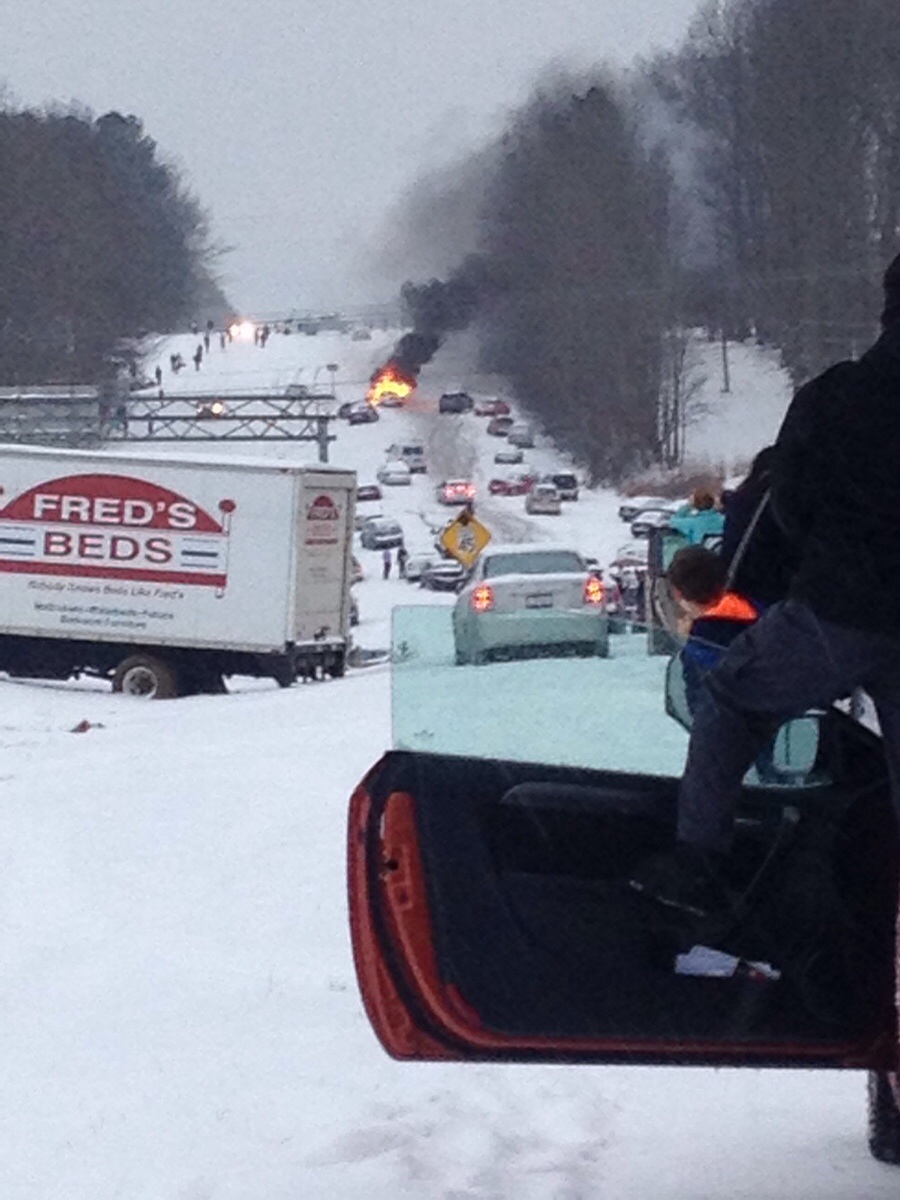
    When it ices and snows like this all you need is one driver who doesn't understand the inner workings of a car to try to hard to get up a hill, blow the engine, throw oil and thus fire everywhere, and bam, road closed for hours.

    Click to view the full version

    Its snowed in tampa in my lifetime, but fuck you if you think I own snow tires or chains.
    "In a field where an overlooked bug could cost millions, you want people who will speak their minds, even if they’re sometimes obnoxious about it."

  7. #7
    Quote Originally Posted by Ominous Gamer View Post
    No one does this, because its extremely impractical, otherwise most states would have their citizens living under ground because of tornadoes.

    When it ices and snows like this all you need is one driver who doesn't understand the inner workings of a car to try to hard to get up a hill, blow the engine, throw oil and thus fire everywhere, and bam, road closed for hours.

    Its snowed in tampa in my lifetime, but fuck you if you think I own snow tires or chains.
    There's also a trade-off between the cost of preparation and the expected cost of the damages caused by not being prepared. No one is saying governments need to spend a fortune on events that are highly, highly unlikely. But snow is not highly unlikely. It falls every so often. It wouldn't kill anyone to have a few snow plows ready. Heck, they have snow plows here that are simply attached to normal vans. The cost is minimal.
    Hope is the denial of reality

  8. #8
    Quote Originally Posted by Ominous Gamer View Post
    No one does this, because its extremely impractical, otherwise most states would have their citizens living under ground because of tornadoes.

    When it ices and snows like this all you need is one driver who doesn't understand the inner workings of a car to try to hard to get up a hill, blow the engine, throw oil and thus fire everywhere, and bam, road closed for hours.

    Its snowed in tampa in my lifetime, but fuck you if you think I own snow tires or chains.
    I agree with your general sentiment (though for something that happens every few years, it's not crazy to think states and municipalities should be prepared), but seriously? Snow tires and chains? I've lived in cold or coldish cities my entire life and I've never had either.

    That being said, snow removal equipment and salt trucks aren't exactly one purpose. In Chicago, they regularly convert garbage trucks and dump trucks for this purpose - it means you only need the kits, not the whole vehicle. Similarly, salt keeps indefinitely and doesn't need maintenance. I don't doubt that there's costs associated with this, but they might be offset by the gains to be had from preventing utter chaos (and voter anger). In Tampa, maybe not worth it, but in the Carolinas, it probably is.

    I would agree that expensive purpose-built equipment like snow melters should not be a major priority for municipalities in balmier climates.

  9. #9
    Quote Originally Posted by wiggin View Post
    I agree with your general sentiment (though for something that happens every few years, it's not crazy to think states and municipalities should be prepared), but seriously? Snow tires and chains? I've lived in cold or coldish cities my entire life and I've never had either.

    That being said, snow removal equipment and salt trucks aren't exactly one purpose. In Chicago, they regularly convert garbage trucks and dump trucks for this purpose - it means you only need the kits, not the whole vehicle. Similarly, salt keeps indefinitely and doesn't need maintenance. I don't doubt that there's costs associated with this, but they might be offset by the gains to be had from preventing utter chaos (and voter anger). In Tampa, maybe not worth it, but in the Carolinas, it probably is.

    I would agree that expensive purpose-built equipment like snow melters should not be a major priority for municipalities in balmier climates.
    we're not working under the assumption that these locations have zero equipment are we? Cause there is a huge difference between having nothing and not having enough to canvas a city and its connected communities in 4 hours.
    "In a field where an overlooked bug could cost millions, you want people who will speak their minds, even if they’re sometimes obnoxious about it."

  10. #10
    Quote Originally Posted by Ominous Gamer View Post
    we're not working under the assumption that these locations have zero equipment are we? Cause there is a huge difference between having nothing and not having enough to canvas a city and its connected communities in 4 hours.
    They should have enough to keep main arteries clear, yes. Side streets, not so much.

    Obviously it's more complex than X number of plows and salt trucks being needed - there's a lot of sophistication having to do with traffic levels, maximal rate of snow accumulation, etc. But there are reasonable assumptions that can be made that can limit the massive disruption from anything more than a blizzard with a relatively modest investment. The kind of crazy stuff that cities farther north focus on is, of course, not necessary.

  11. #11
    Quote Originally Posted by wiggin View Post
    I agree with your general sentiment (though for something that happens every few years, it's not crazy to think states and municipalities should be prepared), but seriously? Snow tires and chains? I've lived in cold or coldish cities my entire life and I've never had either.
    If you've lived in cold/snow states and never had snow tires or chains, it's because your municipality did the heavy lifting by keeping roads plowed and salted, or you lived near a city with good public transit (like trains or subways). PA is a snow state....and plenty of drivers switch out their tires after Thanksgiving, because they perform better than "all weather" tires. And our school buses and mail trucks usually put chains on their vehicles too, because it's a blurry line from city to suburb to rural.

    18 wheeled and double truck rigs are a huge problem. Georgia learned that the hard way. When road conditions get bad, the Governor or DOT should require them to pull-off interstate highways and turnpikes.

    That being said, snow removal equipment and salt trucks aren't exactly one purpose. In Chicago, they regularly convert garbage trucks and dump trucks for this purpose - it means you only need the kits, not the whole vehicle. Similarly, salt keeps indefinitely and doesn't need maintenance. I don't doubt that there's costs associated with this, but they might be offset by the gains to be had from preventing utter chaos (and voter anger). In Tampa, maybe not worth it, but in the Carolinas, it probably is.

    I would agree that expensive purpose-built equipment like snow melters should not be a major priority for municipalities in balmier climates.
    Agreed, but don't forget that salt is now in short supply. We nearly went through our entire winter supply, based on "normal" winter weather predictions, before the end of January. Salt doesn't need maintenance, but it does need huge supply depots, vehicles and manpower to move it around.

    Warmer climates could do a better job maintaining their airport runways, especially since they're national/international hubs. By default that means they'll have to do better at commuting employees from home to work, whether it's by roads or rails.

    It's high time we admit that "extreme weather" events have far reaching ripple-effects.

  12. #12
    Quote Originally Posted by GGT View Post
    If you've lived in cold/snow states and never had snow tires or chains, it's because your municipality did the heavy lifting by keeping roads plowed and salted, or you lived near a city with good public transit (like trains or subways). PA is a snow state....and plenty of drivers switch out their tires after Thanksgiving, because they perform better than "all weather" tires. And our school buses and mail trucks usually put chains on their vehicles too, because it's a blurry line from city to suburb to rural.
    So? Most of the US population is in urban areas, and we're not talking about clearing rural roads, but keeping major cities open for business. I don't doubt that snow tires and chains are useful for some people, but for the vast majority of the US population in snowy regions, they're largely unimportant.

    Agreed, but don't forget that salt is now in short supply. We nearly went through our entire winter supply, based on "normal" winter weather predictions, before the end of January. Salt doesn't need maintenance, but it does need huge supply depots, vehicles and manpower to move it around.
    Vehicles and manpower are easy, they are multipurpose (and frankly no one is expecting garbage pickup or construction work during a snowstorm). Salt supplies are cheapish and last indefinitely, though I'll recognize they take up space. You don't need super-fancy storage, though - protection from rain is about all you need.

  13. #13
    That's not what I said, but you actually made my point -- that southern US states routinely have some degree of wintry weather, but don't "prepare" for it very well. They treat snow or ice as isolated, rare, or unexpected "extreme" weather events....even though it happens every year. The citrus industry knows that first hand.

    It seems to me there's a lot of "weather denial" going on, and it's not limited to the US.

    *Isn't there a current debate in the UK about their recent floods...and whether "extreme" weather is to blame, or "extreme" policies?*


    edit @ Lewk -- you've been very opinionated about people living in high-risk, 'extreme weather' areas. Mostly from the Insurance Industry perspective. Do you still believe that private insurance is the best way to tackle the problems between "extreme weather", where people live and work, and public policy?
    Last edited by GGT; 02-13-2014 at 07:16 AM.

  14. #14
    Senior Member
    Join Date
    Jan 2010
    Location
    Amsterdam/Istanbul
    Posts
    12,462
    I don't see too much extreme weather here in The Netherlands, or Turkey for that matter.
    Congratulations America

  15. #15
    Quote Originally Posted by GGT View Post

    edit @ Lewk -- you've been very opinionated about people living in high-risk, 'extreme weather' areas. Mostly from the Insurance Industry perspective. Do you still believe that private insurance is the best way to tackle the problems between "extreme weather", where people live and work, and public policy?
    Yes.

  16. #16
    Senior Member Flixy's Avatar
    Join Date
    Jan 2010
    Location
    The Netherlands
    Posts
    6,435
    Here in Belgium it's just regular shitty weather, mostly. Rain and wind, yay. Beats floods and snowstorms, at least!
    Keep on keepin' the beat alive!

  17. #17
    Stingy DM Veldan Rath's Avatar
    Join Date
    Jan 2010
    Location
    Maine! And yes, we have plumbing!
    Posts
    3,064
    I appear to have some snow in my yard...
    Brevior saltare cum deformibus viris est vita

  18. #18
    Here in the UK we're having extreme weather caused by an horrific phenomenon known as "winter".

    Seriously though shit weather happens from time to time, there is nothing happening now that hasn't happened in the past. Nothing unprecedented. Preparation is the key. What winds me up nowadays is when people blame anything and everything on "climate change" - when its just bog standard shitty weather. 2 years ago we were in a drought and housepipe bans were put in place with reservoirs going dry after 2 drier than normal winters (must be climate change), then its been heavily raining with 2 wetter than normal winters (must be climate change). No its variance and we simply have shitty weather in England sometimes, we're known for it.

    I'm in the North-West and we haven't been affected by flooding but down south in Somerset and other counties there's been massive flooding and the Thames has burst its banks in places. Its long been known that there's flood plains there and the Somerset Levels are partially reclaimed land and at high risk of flooding. But a few years ago the Environment Agency decided it was not going to dredge the rivers in that area in order to encourage some flooding to promote biodiversity. This is said to be based on an EU Directive but I must stress that I DO NOT blame the EU for this, I blame the idiots who work in the UK's Environment Agency. Guess what, when we've had higher than normal rain this year there has been flooding as encouraged rather than prevented. Out of control flooding. If you're going to build on a flood plain try and prevent not encourage flooding.

    The alternative is quite simple: Don't build on flood plains. Don't live on flood plains. Don't buy a home on flood plains.
    Quote Originally Posted by GGT View Post
    edit @ Lewk -- you've been very opinionated about people living in high-risk, 'extreme weather' areas. Mostly from the Insurance Industry perspective. Do you still believe that private insurance is the best way to tackle the problems between "extreme weather", where people live and work, and public policy?
    Well I do absolutely. I couldn't count the amount of times I've heard sob stories from idiots who've got a house on a flood plain, got flooded and then cried to the media how unfair it is because they have no insurance as the insurance company wouldn't cover them as they're on a known flood plain. Hey genius who's fault is that? Get away from the flood plain you fool. If I got told that I wouldn't be able to get insurance as the company fully expects the house to be flooded I wouldn't move there in the first place, or would try to move away. Don't move onto a flood plain then curse your luck/the government/the world for your own dumb choice.

    Incidentally when we bought our house we did a survey on the property which checked for things like that. It was mandatory in order to get a mortgage. First house we surveyed got a red flag because of the fact a power pylon went overhead - not something that bothered me but the surveyor said it was a risk as if the power pylon came down the power company would have every right to knock down what would our fencing and do whatever it takes to restore the power line. Also it might damage the value of the house on resale as people are worried due to scare stories that it may cause cancer (not that it does, just the scare stories that it might is enough to devalue it) - as a result we didn't buy that property. We did ask the owner to reduce the asking price to what our surveyor said it was worth but he refused so no deal. Had we exchanged and any of the risks happened it would have been our responsibility and nobody elses. A flood plain was a red line for me that no matter the value I'm not interested in that under any circumstances.

    Heard one moron moaning on the BBC this year that they weren't expecting a flood as it hasn't flooded in that area for eight years and now his stuff is ruined and he has no insurance. Eight years. Not eighty, not one in a hundred, its not even a decade since the last flood. Why do you think the insurance company said no?
    Quote Originally Posted by Ominous Gamer View Post
    No one does this, because its extremely impractical, otherwise most states would have their citizens living under ground because of tornadoes.

    When it ices and snows like this all you need is one driver who doesn't understand the inner workings of a car to try to hard to get up a hill, blow the engine, throw oil and thus fire everywhere, and bam, road closed for hours.

    <Image snip>

    Its snowed in tampa in my lifetime, but fuck you if you think I own snow tires or chains.
    If the worst that happens is a road closure that's not exactly the end of the world.
    Last edited by RandBlade; 02-14-2014 at 01:32 PM.
    Quote Originally Posted by Ominous Gamer View Post
    ℬeing upset is understandable, but be upset at yourself for poor planning, not at the world by acting like a spoiled bitch during an interview.

  19. #19
    Senior Member Flixy's Avatar
    Join Date
    Jan 2010
    Location
    The Netherlands
    Posts
    6,435
    Quote Originally Posted by RandBlade View Post
    Here in the UK we're having extreme weather caused by an horrific phenomenon known as "winter".

    Seriously though shit weather happens from time to time, there is nothing happening now that hasn't happened in the past. Nothing unprecedented. Preparation is the key. What winds me up nowadays is when people blame anything and everything on "climate change" - when its just bog standard shitty weather. 2 years ago we were in a drought and housepipe bans were put in place with reservoirs going dry after 2 drier than normal winters (must be climate change), then its been heavily raining with 2 wetter than normal winters (must be climate change). No its variance and we simply have shitty weather in England sometimes, we're known for it.
    On the other hand, one cold summer also doesn't mean it's all a hoax It's just generally a bad idea to base your idea of something like global warming based on local anecdotal incomplete evidence. That said, even if it's weather that has happened before in the UK, if it consistently occurs more frequently over a longer period than it used to historically, that could be an indication something has influenced it, which might be global warming. I'm not a climatologist, so I don't know, but the weather and climate are obviously connected.
    I'm in the North-West and we haven't been affected by flooding but down south in Somerset and other counties there's been massive flooding and the Thames has burst its banks in places. Its long been known that there's flood plains there and the Somerset Levels are partially reclaimed land and at high risk of flooding. But a few years ago the Environment Agency decided it was not going to dredge the rivers in that area in order to encourage some flooding to promote biodiversity. This is said to be based on an EU Directive but I must stress that I DO NOT blame the EU for this, I blame the idiots who work in the UK's Environment Agency. Guess what, when we've had higher than normal rain this year there has been flooding as encouraged rather than prevented. Out of control flooding. If you're going to build on a flood plain try and prevent not encourage flooding.

    The alternative is quite simple: Don't build on flood plains. Don't live on flood plains. Don't buy a home on flood plains.
    Well I do absolutely. I couldn't count the amount of times I've heard sob stories from idiots who've got a house on a flood plain, got flooded and then cried to the media how unfair it is because they have no insurance as the insurance company wouldn't cover them as they're on a known flood plain. Hey genius who's fault is that? Get away from the flood plain you fool. If I got told that I wouldn't be able to get insurance as the company fully expects the house to be flooded I wouldn't move there in the first place, or would try to move away. Don't move onto a flood plain then curse your luck/the government/the world for your own dumb choice.

    Incidentally when we bought our house we did a survey on the property which checked for things like that. It was mandatory in order to get a mortgage. First house we surveyed got a red flag because of the fact a power pylon went overhead - not something that bothered me but the surveyor said it was a risk as if the power pylon came down the power company would have every right to knock down what would our fencing and do whatever it takes to restore the power line. Also it might damage the value of the house on resale as people are worried due to scare stories that it may cause cancer (not that it does, just the scare stories that it might is enough to devalue it) - as a result we didn't buy that property. We did ask the owner to reduce the asking price to what our surveyor said it was worth but he refused so no deal. Had we exchanged and any of the risks happened it would have been our responsibility and nobody elses. A flood plain was a red line for me that no matter the value I'm not interested in that under any circumstances.

    Heard one moron moaning on the BBC this year that they weren't expecting a flood as it hasn't flooded in that area for eight years and now his stuff is ruined and he has no insurance. Eight years. Not eighty, not one in a hundred, its not even a decade since the last flood. Why do you think the insurance company said no?
    Aye, that's just stupidity. You could claim ignorance, but if your insurance company informed you they don't insure you for that because the risk is too high.. Well, I don't feel sorry for you. On the other hand, our water protection here is rated between a flood once in 250 years and once in 1250 years (for rivers), and between one in 2.000 years and one in 10.000 years for sea floods (depending on the economic importance of the area), which makes it a bit more understandable to be pissed if your house is flooded

    edit: And only if circumstances don't change, of course. If government policy on flood protection changes, rivers are moved, etc., then it's not really your fault anymore. Similarly I don't feel sympathy for people who move next to a school/airport and then complain about the noise, but if you live somewhere and one is built next to you, you have a right to complain.
    Keep on keepin' the beat alive!

  20. #20
    Quote Originally Posted by Flixy View Post
    On the other hand, one cold summer also doesn't mean it's all a hoax It's just generally a bad idea to base your idea of something like global warming based on local anecdotal incomplete evidence. That said, even if it's weather that has happened before in the UK, if it consistently occurs more frequently over a longer period than it used to historically, that could be an indication something has influenced it, which might be global warming. I'm not a climatologist, so I don't know, but the weather and climate are obviously connected.
    Climate change probably is occuring but every bad winter or good summer or anything other than the mean is not climate change. Its just the climate.
    Aye, that's just stupidity. You could claim ignorance, but if your insurance company informed you they don't insure you for that because the risk is too high.. Well, I don't feel sorry for you. On the other hand, our water protection here is rated between a flood once in 250 years and once in 1250 years (for rivers), and between one in 2.000 years and one in 10.000 years for sea floods (depending on the economic importance of the area), which makes it a bit more understandable to be pissed if your house is flooded
    If its once per 250 years you shouldn't struggle to get insurance on that.
    edit: And only if circumstances don't change, of course. If government policy on flood protection changes, rivers are moved, etc., then it's not really your fault anymore. Similarly I don't feel sympathy for people who move next to a school/airport and then complain about the noise, but if you live somewhere and one is built next to you, you have a right to complain.
    Agreed. But then there's normally (and rightly) compensation schemes for those who are affected then. Compensation should be applied before, at or around the time of the change and then its settled - don't complain all the time afterwards.
    Quote Originally Posted by Ominous Gamer View Post
    ℬeing upset is understandable, but be upset at yourself for poor planning, not at the world by acting like a spoiled bitch during an interview.

  21. #21
    Senior Member Flixy's Avatar
    Join Date
    Jan 2010
    Location
    The Netherlands
    Posts
    6,435
    Quote Originally Posted by RandBlade View Post
    Climate change probably is occuring but every bad winter or good summer or anything other than the mean is not climate change. Its just the climate.
    Sure, but a trend in the weather (over multiple years/decades) is - so if statistically significantly more storms occur, that can be related to climate change. It's not proof an sich, but climate change can cause storms to occur more frequently.
    If its once per 250 years you shouldn't struggle to get insurance on that.
    On the contrary, large environmental disasters are (like terrorist attacks) excluded from most policies. In fact, a quick google tells me that between 1953 and 2012 it was completely impossible to insure against that.
    Keep on keepin' the beat alive!

  22. #22
    Quote Originally Posted by RandBlade View Post
    Here in the UK we're having extreme weather caused by an horrific phenomenon known as "winter".
    Winter is a season. According to your Environmental Agency, your floods are related to "extreme rain" and the Thames breaching its banks. Plus chalk in your soil that's saturated to capacity, and causing ground-flooding.

    Seriously though shit weather happens from time to time, there is nothing happening now that hasn't happened in the past. Nothing unprecedented. Preparation is the key. What winds me up nowadays is when people blame anything and everything on "climate change" - when its just bog standard shitty weather. 2 years ago we were in a drought and housepipe bans were put in place with reservoirs going dry after 2 drier than normal winters (must be climate change), then its been heavily raining with 2 wetter than normal winters (must be climate change). No its variance and we simply have shitty weather in England sometimes, we're known for it.
    This thread is about extreme weather events, not "climate change". England also had heavy rains and flooding in '02 and '07, but this time around it's winter rain (not spring) rain. True, some are 'normal' variances, or trends that can be expected....but it's also true that magnitude and frequency are changing. BBC has some nice historical charts, and articles discussing the "new normal".


    I'm in the North-West and we haven't been affected by flooding but down south in Somerset and other counties there's been massive flooding and the Thames has burst its banks in places. Its long been known that there's flood plains there and the Somerset Levels are partially reclaimed land and at high risk of flooding. But a few years ago the Environment Agency decided it was not going to dredge the rivers in that area in order to encourage some flooding to promote biodiversity. This is said to be based on an EU Directive but I must stress that I DO NOT blame the EU for this, I blame the idiots who work in the UK's Environment Agency. Guess what, when we've had higher than normal rain this year there has been flooding as encouraged rather than prevented. Out of control flooding. If you're going to build on a flood plain try and prevent not encourage flooding.


    Living on higher ground doesn't mean much, the flooding will affect everyone in your country, indirectly. I'm not familiar with how your gov't agencies work together, how choices are made between biodiversity and infrastructure -- or whether Austerity was the defining factor. Cameron is saying today that money is no object, we'll spend whatever we need to spend, but is getting flak for not having spent money on prevention (preparation) when it could have made a difference.

    The alternative is quite simple: Don't build on flood plains. Don't live on flood plains. Don't buy a home on flood plains.
    It only sounds simple to focus on topographic 'flood plains'. In reality it's more complicated, because now there are 'flood zones', and places that never flooded before (even after heavy rain events).


    Well I do absolutely. I couldn't count the amount of times I've heard sob stories from idiots who've got a house on a flood plain, got flooded and then cried to the media how unfair it is because they have no insurance as the insurance company wouldn't cover them as they're on a known flood plain. Hey genius who's fault is that? Get away from the flood plain you fool. If I got told that I wouldn't be able to get insurance as the company fully expects the house to be flooded I wouldn't move there in the first place, or would try to move away. Don't move onto a flood plain then curse your luck/the government/the world for your own dumb choice.<snip>
    And if they built there 100 years ago? What about new flood zones that expand beyond previous 'flood plains' due to man-made decisions? Should the private insurance industry be setting the price for proximity to the Thames or tributaries, including businesses -- or does that include a federal/national flood insurance program?

    There's only so much land to begin with. What are you going to do -- price everyone out of an area, or forcibly move/remove people from 'danger' zones (when apparently that includes overhead power lines, too)?

  23. #23
    Quote Originally Posted by GGT View Post
    Winter is a season. According to your Environmental Agency, your floods are related to "extreme rain" and the Thames breaching its banks. Plus chalk in your soil that's saturated to capacity, and causing ground-flooding.
    I know that, hence why I put winter in quotation marks. It was a joke.
    This thread is about extreme weather events, not "climate change". England also had heavy rains and flooding in '02 and '07, but this time around it's winter rain (not spring) rain. True, some are 'normal' variances, or trends that can be expected....but it's also true that magnitude and frequency are changing. BBC has some nice historical charts, and articles discussing the "new normal"
    Source? There's nothing happening now that hasn't happened before and it is not scientific to highlight something after it has happened and say "see that's an exception" because that is just a selection bias.
    Living on higher ground doesn't mean much, the flooding will affect everyone in your country, indirectly.
    I've not been affected one jot that I know of. If it wasn't for the news/internet might not even know that there was a flood on.
    I'm not familiar with how your gov't agencies work together, how choices are made between biodiversity and infrastructure -- or whether Austerity was the defining factor. Cameron is saying today that money is no object, we'll spend whatever we need to spend, but is getting flak for not having spent money on prevention (preparation) when it could have made a difference.
    Bull. Austerity has no bearing whatsoever on this. The Environmental Agency chose not to dredge the rivers, chose to encourage flooding to encourage biodiversity that has nothing to do with austerity. The UK has shit weather when it comes to rain but remarkably calm weather when it comes to extremes. We almost never get severe earthquakes, hurricanes, tornadoes, tsunamis etc - yet the UK's Environmental Agency has 11,200 employees - more than the equivalents of Canada, Denmark, France, Germany and Austria combined. Nearly as many as the USA's Environmental Protection Agency. Last year the Environment Agency spent £2.7m on dredging rivers, £20m on total river maintenance ... but £592mn on staffing costs. Totally messed up priorities. Quite frankly we could cut 80% of the employees out the Environment Agency bringing our small islands nation down to that which covers the entirety of Canada or Germany alone and spend more on avoiding this.

    There's a saying I've known since being a child: "too many chefs spoil the broth". Does it make any sense to you that the UK would need more employees in its Environment Agency than Canada which has significantly worse weather and is 36 times our size? Does it make any sense to you that the UK would need more employees than Canada, Denmark, France, Germany and Austria combined? Does it make any sense to you that we spend 220x more on wages/pensions than on actually dredging rivers etc which prevents flooding?
    And if they built there 100 years ago? What about new flood zones that expand beyond previous 'flood plains' due to man-made decisions? Should the private insurance industry be setting the price for proximity to the Thames or tributaries, including businesses -- or does that include a federal/national flood insurance program?
    Source for new ones please?
    There's only so much land to begin with. What are you going to do -- price everyone out of an area, or forcibly move/remove people from 'danger' zones (when apparently that includes overhead power lines, too)?
    97% of UK land is undeveloped, a higher proportion for most other nations. There's more than enough land.
    Quote Originally Posted by Ominous Gamer View Post
    ℬeing upset is understandable, but be upset at yourself for poor planning, not at the world by acting like a spoiled bitch during an interview.

  24. #24
    Quote Originally Posted by RandBlade View Post
    I've not been affected one jot that I know of. If it wasn't for the news/internet might not even know that there was a flood on.
    Suppose it depends where you live.

    Us living just off the Thames in Twickenham, it's all anybody is talking about.

    West of Teddington Lock where the Thames stops being tidal, I've never known the Thames rise much at all, let alone breach it's banks, in the 22 years I've lived around the area. An entire stretch of development of bars and restaurants that we frequent in Kingston over the bridge from us is flooded out.

    This is a picture a friend of mine took from within one of those restaurants as the water was rising and posted on Facebook.


    Officially the wettest winter in history.
    Last edited by Timbuk2; 02-16-2014 at 09:38 AM.

  25. #25
    Quote Originally Posted by RandBlade View Post
    I know that, hence why I put winter in quotation marks. It was a joke.
    Source? There's nothing happening now that hasn't happened before and it is not scientific to highlight something after it has happened and say "see that's an exception" because that is just a selection bias.
    I've not been affected one jot that I know of. If it wasn't for the news/internet might not even know that there was a flood on.
    BBC--with charts for rainfall by season and year, showing it's the rainiest winter on record. They also wrote about greater numbers of people, and newly flooded areas, related to building and infrastructure practices. That you haven't been affected directly doesn't mean you won't feel it in taxation or public policy.

    Bull. Austerity has no bearing whatsoever on this. The Environmental Agency chose not to dredge the rivers, chose to encourage flooding to encourage biodiversity that has nothing to do with austerity. The UK has shit weather when it comes to rain but remarkably calm weather when it comes to extremes. We almost never get severe earthquakes, hurricanes, tornadoes, tsunamis etc - yet the UK's Environmental Agency has 11,200 employees - more than the equivalents of Canada, Denmark, France, Germany and Austria combined. Nearly as many as the USA's Environmental Protection Agency. Last year the Environment Agency spent £2.7m on dredging rivers, £20m on total river maintenance ... but £592mn on staffing costs. Totally messed up priorities. Quite frankly we could cut 80% of the employees out the Environment Agency bringing our small islands nation down to that which covers the entirety of Canada or Germany alone and spend more on avoiding this. <snip>

    Does it make any sense to you that we spend 220x more on wages/pensions than on actually dredging rivers etc which prevents flooding?
    Well, who sets the priorities over there -- the Environmental Agency? Of course it doesn't make sense to spend 200X more on wages/pensions than infrastructure programs, but Austerity (as a policy) doesn't mean priorities are put into proper perspective, either....just that there's less spending somewhere to balance the books.

    Would Cameron's administration have spent 500 Million on water management programs -- dredging rivers, building new locks or levees, moving or upgrading utilities -- but only if it came from less spending in other areas? Or would it still have been considered unnecessary government spending? That's a rhetorical question about ideology and "political climates"

    Source for new ones please?
    97% of UK land is undeveloped, a higher proportion for most other nations. There's more than enough land.
    Mostly BBC articles, but also US news sources. They discuss the relationships b/w new construction, surface run-off, soil composition, ground flooding, and rainwater/water management. That kind of engineering is important science, especially for densely populated places, whether it's a small nation like the UK, or an important city like NYC.

    Thinking there's "more than enough land" doesn't excuse or replace bad (or outdated) land/water management. That's actually a quite dangerous attitude to have when making public policy, IMO.

  26. #26
    Senior Member Flixy's Avatar
    Join Date
    Jan 2010
    Location
    The Netherlands
    Posts
    6,435
    Quote Originally Posted by RandBlade View Post
    I know that, hence why I put winter in quotation marks. It was a joke.
    Source? There's nothing happening now that hasn't happened before and it is not scientific to highlight something after it has happened and say "see that's an exception" because that is just a selection bias.
    I've not been affected one jot that I know of. If it wasn't for the news/internet might not even know that there was a flood on.
    Bull. Austerity has no bearing whatsoever on this. The Environmental Agency chose not to dredge the rivers, chose to encourage flooding to encourage biodiversity that has nothing to do with austerity. The UK has shit weather when it comes to rain but remarkably calm weather when it comes to extremes. We almost never get severe earthquakes, hurricanes, tornadoes, tsunamis etc - yet the UK's Environmental Agency has 11,200 employees - more than the equivalents of Canada, Denmark, France, Germany and Austria combined. Nearly as many as the USA's Environmental Protection Agency. Last year the Environment Agency spent £2.7m on dredging rivers, £20m on total river maintenance ... but £592mn on staffing costs. Totally messed up priorities. Quite frankly we could cut 80% of the employees out the Environment Agency bringing our small islands nation down to that which covers the entirety of Canada or Germany alone and spend more on avoiding this.

    There's a saying I've known since being a child: "too many chefs spoil the broth". Does it make any sense to you that the UK would need more employees in its Environment Agency than Canada which has significantly worse weather and is 36 times our size? Does it make any sense to you that the UK would need more employees than Canada, Denmark, France, Germany and Austria combined? Does it make any sense to you that we spend 220x more on wages/pensions than on actually dredging rivers etc which prevents flooding?
    Source for new ones please?
    97% of UK land is undeveloped, a higher proportion for most other nations. There's more than enough land.
    A few things - apparently it's the wettest winter in 250 years, which means that it is obviously an exception. A more fair question is whether the exception was to be taken into account with flood planning. For example, as I've posted before, over here the acceptable risks for flooding are between 1/250 years and 1/10.000 years - which would make flooding in certain areas in the wettest season in 250 years an acceptable risk in some parts (the risks depend on forecasts of economical damage and loss of lives, i.e. industrial areas and highly populated areas are kept safer, as well as sea flooding areas in general since river floods are more predictable, and therefore the areas can be evacuated more in advance, reducing the damage and loss of lives).

    Second, the staffing vs. maintenance costs isn't as messed up as you make it out to be (not by definition anyway). The agency is also responsible for environmental regulation, which is obviously a lot broader than just river defenses. Also costs of new (expensive) projects tends to be outside the usual budget, and the more important question is 'how much is needed for proper maintenance'. I'm not sure about the budget of our flood prevention here, since it's mostly decentralized. Which also makes it hard to compare the amount of employees, also because our water boards are responsible for flood protection and drinking water, and the national service responsible for flood protection is also responsible for waterway management in general, and road infrastructure as well. This article mentions €2.2bn, but that appears to be money earmarked for upgrading the defenses to reduce the flooding risk, not maintenance. Also mentions that over here farmers from flood plains were forced to relocate, and the interviewed farmer understands the reasons for it.

    Also, with the number of recent floods you guys have had (8 or 9 since 2000?) makes it clear your country obviously has a high risk for flooding, and something actually should be done properly about that. That many floods would be unacceptable here, I don't think we've had many since 1960 (two relatively minor river floods in 1993 and 1995 spring to mind). In the long run, that's like to be very cost effective too, with each flood costing millions-billions in economic damage. Comparing the size of an agency with, say, the Canadian, isn't that useful, since Canada has different risks, and the agency may have different responsibilities as well. What you need is to assess whether they provide their money's worth, and if not it should be reorganized. I think it's safe to say that for a country as densely populated as the UK (97% undeveloped land, sure, but you're living in one of the most densely populated countries, esp. England, which is more densely populated than the Netherlands) flood protection is very important, and should be handled by the government. Also you say austerity had no influence, but they at least claim that part of the reason not to dredge was lack of money.

    About the dredging, while it obviously helps, it's not an end-all or long-term solution - it's important next to the rest of the protection. Flood plains are (as the name implies) supposed to be flooded.. It's natural, and a way to increase the water capacity of the rivers. It's good policy to have them flooded regularly, because a) that's the function of it, and b) it's very good environmentally. Over here it's mostly grazing lands, I think, so when the rivers get high you can just pull the cows back to the farm, and you're good. It sounds like it is mostly a soundbite for easy complaints right now. Also, planning to have flood plains flooded obviously does imply you still protect beyond those plains. It's a recommended tactic by basically most experts.

    On a side note, I was looking up some articles about the Dutch help that has been sent to the UK (mostly expertise), and am once again surprised by the anti-EU stuff.. It's not the EUs fault, we are also operating within the EU and manage just fine. It's how you implement recommendation/rules that makes the difference. And if your flood defense is underfunded, it's not surprising it will come back and bite you. Like I said, floods that costs hundreds of millions to billions in damage every few years is not a very sustainable plan either.. Also, they're conveniently forgetting the EU also pays out compensation from the solidarity fund for the damages. Less for the UK, but EU-wide cooperation for flood risk is very important, because what, say, Germany does, affects the water levels in the Netherlands as well. Add local expertise from different areas, and it's simply sensible to cooperate on this subject.

    edit: this was an interesting/surprising read, too: http://www.theguardian.com/world/201...demon-flooding The Great Demon!
    "Pointing the finger at the extractive industries gets us off the hook and avoids the fundamental problem which is our selfishness and our way of life, which has been fuelled by plentiful, cheap energy and more and more people around the world wanting that," he said.

    [...]

    "Climate change is a moral issue because the rich world has disproportionately contributed to it and the poor world is disproportionately suffering. Poor communities are least equipped to deal with the impacts."
    Steven Croft, the bishop of Sheffield, described the threat of climate change as "a giant evil; a great demon of our day", adding: "Its power is fed by greed, blindness and complacency in the present generation, and we know that this giant wreaks havoc though the immense power of the weather systems, which are themselves unpredictable."
    Keep on keepin' the beat alive!

  27. #27
    The purchase, storage and maintenance of snow equipment is not a minimal cost. Not when its used a couple of days and sits collecting dust and rust for 1000.

  28. #28
    And how much does it cost to clear up car accidents and make up for lost business from people not going to work and not going to shop?
    Hope is the denial of reality

  29. #29
    Likely as much as our gas boycotts costs a few years ago

  30. #30
    our insurance industry likes to call them "acts of god"
    "In a field where an overlooked bug could cost millions, you want people who will speak their minds, even if they’re sometimes obnoxious about it."

Posting Permissions

  • You may not post new threads
  • You may not post replies
  • You may not post attachments
  • You may not edit your posts
  •