Page 1 of 3 123 LastLast
Results 1 to 30 of 87

Thread: Corporate Overlords are Mining the Sky

  1. #1

    Default Corporate Overlords are Mining the Sky

    Asteroid Mining: Planetary Resources Plans to Dig Off-Earth
    Forget Earth. Let's mine space.

    There are a lot of rocks floating around out there beyond our planet's confines, and the thinking of a smart, connected and very rich group of investors is that the time is right to search for resources somewhere besides the ground we call home.

    A company called Planetary Resources -- started three years ago, but only now unveiling its plans -- is spearheading an effort to start mining near-Earth asteroids for human-friendly materials, specifically water and platinum-group metals. Sound a little wacky, at best? Maybe reminds you of "Alien" or "Outland" or some other good-intentions-go-bad in outer space tale?
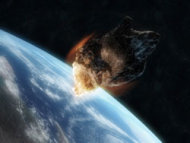
    Skepticism is never an awful approach, but the people attached to the project and the investors in it are telling a pretty serious story. A number of Planetary Resources executives, including Eric Anderson and Peter Diamandis, of X Prize Foundation fame, held a press conference at The Museum of Flight in Seattle on Tuesday to discuss the company and its goals.

    Diamandis said the primary purpose was to "make the resources of space available to humanity," both outside of and on Earth. "It can be done, and yes, it's very difficult," but the returns "are extraordinary," he said.

    While the project sounds very much like any number of science fiction stories, it has attracted the interest of rather serious brain power and financial means. Among those involved are Google's (GOOG) Larry Page and Eric Schmidt, Ross Perot Jr., former Microsoft (MSFT) software architect Charles Simonyi and movie director turned submarine adventurer James Cameron. The chief engineer of Planetary Resources is a former manager at NASA's well-known Jet Propulsion Laboratory, and a host of other engineers and even former astronauts are involved.

    Anderson said at the conference that the rationale for initially seeking water on the asteroids will be first because it can support life, and second because its components, hydrogen and oxygen, are key propellants for rocket launches. The thinking there would be to use asteroids as a type of gas station or launch pad for deep space missions. The platinum metals, meanwhile, are being sought because they're rare on our planet, and therefore expensive, but they're vital for a range of industrial applications.

    "We're going to bring the solar system within our economic sphere of influence," Anderson said.

    Planetary Resources is envisioning a three-phase process over the next few years. The first is to fully develop its technology, with the hope of launching its early equipment within 24 months. The next step will involve figuring out which asteroids are the best targets for mining, and that will be followed by extraction.

    The group's speakers acknowledged the high risks and the potential for failure of the undertaking, but indicated they believe it's worth it. Ahead of the press conference, a report in The New York Times quoted Anderson as saying the "collective net worth" of Planetary Resources' investors is around $50 billion, "and they know what they're getting into." When asked, he declined to give details on Planetary Resources' fundraising totals.

    Investors in the project and the company's employees clearly have a sense of adventure, and at the conference several of them invoked the wonders of space and compared their efforts to the early days of the personal computer and the Internet. But there is absolutely a profit motive -- Anderson made it clear that if the effort is ultimately successful, the financial payoff could be enormous.

    How enormous? Planetary Resources believes its work will have the ability to "add trillions of dollars to the global GDP," according to a Wall Street Journal article. Trillions. For reference, the U.S. economy is worth, in total, about $14 trillion to $15 trillion right now.
    So here's something for skeptics and space junkies alike to keep an eye on.
    Source

    We might be looking at the beginning of Big Space. It's about time. This company has enough money behind them that they might actually have a shot at pulling something off.

  2. #2
    Stingy DM Veldan Rath's Avatar
    Join Date
    Jan 2010
    Location
    Maine! And yes, we have plumbing!
    Posts
    3,064
    I agree, about time. Think the near death of NASA had something to do with it?
    Brevior saltare cum deformibus viris est vita

  3. #3
    A) What happens to the company's profit margins as they start mining this material, seeing that the global supply of the material will skyrocket? I hope they're not counting on the price of platinum to stay at the current level if the supply doubles...

    B) It's not at all clear that this is legal. International law views outer space as belonging to all of mankind. The UN Security Council would have to pass a resolution allowing private companies to mine these asteroids unless the company wants to get into massive legal trouble. And it's not clear that the UN would pass this resolution, at least without the company agreeing to a hefty tax to the UN.
    Hope is the denial of reality

  4. #4
    I think that honestly this only makes sense for selling the materials in orbit. If you can manufacture things (especially fuel) in orbit, you save a huge amount of money not having to boost it out of Earth's gravity well. So in a way, it's not really competing with the Earthbound market, but rather opening up a new market in space. I don't know what their ROI would be, though. Stephen Baxter once argued it would be quite high but I'm skeptical.

    The legal issues are important, though. As are the safety ones.

  5. #5
    Quote Originally Posted by Loki View Post
    A) What happens to the company's profit margins as they start mining this material, seeing that the global supply of the material will skyrocket? I hope they're not counting on the price of platinum to stay at the current level if the supply doubles...
    They probably won't be bringing it down all at once. But yeah, mineral prices will start being depressed. I suppose they'll have to live with not getting a full 4 trillion dollars per rock. Might drop down as low as half a trillion. I think they'll be able to weather that storm.

    Whatever the final profit for the raw minerals looks like, don't forget all the other opportunities this type of thing would open up. I'm sure they have plans for things like space tourism, and other natural extensions of the buisness.
    B) It's not at all clear that this is legal. International law views outer space as belonging to all of mankind. The UN Security Council would have to pass a resolution allowing private companies to mine these asteroids unless the company wants to get into massive legal trouble. And it's not clear that the UN would pass this resolution, at least without the company agreeing to a hefty tax to the UN.
    There is no legal precedent for the activities so it'll be interesting to see what happens. I doubt anyone will be able to stop them, though.

  6. #6
    Senior Member Flixy's Avatar
    Join Date
    Jan 2010
    Location
    The Netherlands
    Posts
    6,435
    Why not? Most launches are from government launch pads and rely heavily on government support, or from heavily regulated commercial launch pads, so it would be fairly easy to stop them.

  7. #7
    Quote Originally Posted by Flixy View Post
    Why not? Most launches are from government launch pads and rely heavily on government support, or from heavily regulated commercial launch pads, so it would be fairly easy to stop them.
    The US government probably could stop them if they wanted to. They won't.

    Also, there are private launch sites in the US.

  8. #8
    Quote Originally Posted by Wraith View Post
    They probably won't be bringing it down all at once. But yeah, mineral prices will start being depressed. I suppose they'll have to live with not getting a full 4 trillion dollars per rock. Might drop down as low as half a trillion. I think they'll be able to weather that storm.

    Whatever the final profit for the raw minerals looks like, don't forget all the other opportunities this type of thing would open up. I'm sure they have plans for things like space tourism, and other natural extensions of the buisness.
    There's also the matter of demand catching up to supply. If you double the supply of platinum, will we even know what to do with it? It will take a while for new uses for the material to become widespread, which means most of the mined material might stay in a warehouse.

    There is no legal precedent for the activities so it'll be interesting to see what happens. I doubt anyone will be able to stop them, though.
    First, a country might feel justified in simply shooting them out of the sky. More likely, a ban can be placed on all material mined from outer space. The US would really have to go all out to prevent both scenarios, and I'm not sure the US would want to sacrifice its political capital for that purpose.
    Hope is the denial of reality

  9. #9
    Well just imagine the explosion in platinum-using products and processes once this kicks into gear
    "One day, we shall die. All the other days, we shall live."

  10. #10
    Senior Member Flixy's Avatar
    Join Date
    Jan 2010
    Location
    The Netherlands
    Posts
    6,435
    You said unable to stop, not unwilling I have no idea whatsoever how any government feels about this. I am aware of private launch pads, but those are still heavily regulated (you can't just shoot stuff in the air).And almost all private space agencies rely heavily on support from NASA, especially complex projects. They have the knowledge and experience. If they are stonewalled from government support, I doubt many, if any, could pull off a project like this in the near future

  11. #11
    Quote Originally Posted by Loki View Post
    There's also the matter of demand catching up to supply. If you double the supply of platinum, will we even know what to do with it? It will take a while for new uses for the material to become widespread, which means most of the mined material might stay in a warehouse.
    I really doubt they'll be able to completely strip mine an asteroid of the trillions worth of minerals all in one go. It'll come down slow enough that it won't be a huge shock to the economy at any point. It's even in their best interest to do so, to sell as much as they can at the higher prices they'll initially get.

    First, a country might feel justified in simply shooting them out of the sky.
    Who the hell's going to do that? Pretty much every other country would go nuts at them. It's not happening.

    More likely, a ban can be placed all material mined from outer space.
    That would be stupid of that country. The benefits of not doing that are too high, and though some might try it, it won't last long. No country's just going to decide to screw themselves like that for long, not to mention the risk of starting a trade war.

    Any real messiness is more likely to come when governments decide they want to go up there and get some asteroid moneys too.

  12. #12
    Quote Originally Posted by Wraith View Post
    Who the hell's going to do that? Pretty much every other country would go nuts at them. It's not happening.
    Why would they do that? They would be attacking the equivalent of a pirate. Furthermore, if the country doing the shooting down is Russia (or perhaps China), what exactly would get done? If anything, most would support their attacks against "greedy American corporations".

    That would be stupid of that country. The benefits of not doing that are too high, and though some might try it, it won't last long. No country's just going to decide to screw themselves like that for long, not to mention the risk of starting a trade war.

    Any real messiness is more likely to come when governments decide they want to go up there and get some asteroid moneys too.
    Who benefits more from an American company mining asteroids, the US or any other country? Sure, you can argue that mankind will benefit, but the US would benefit far more. The rest of the world would want a quid pro quo. And again, a significant amount of international jurists believe this would be illegal. Not that hard to achieve an international consensus to block this mining. I would also imagine that the current producers of those minerals, along with the countries in which they are produced would be very happy to enforce this ban.
    Hope is the denial of reality

  13. #13
    Quote Originally Posted by Loki View Post
    Why would they do that? They would be attacking the equivalent of a pirate. Furthermore, if the country doing the shooting down is Russia (or perhaps China), what exactly would get done? If anything, most would support their attacks against "greedy American corporations".
    What would happen is unknown to me, I could only speculate, but it'd probably be about the same as if they shot down a commercial satelite or exploratory probe. Worse, if it were a manned mission. Besides, there are serious doubts that anyone other than the US really has the capability to do such things. China shot down their own satelite once, but they had to full control over both objects, and I've heard a lot of talk about how they can't do it otherwise.

    Who benefits more from an American company mining asteroids, the US or any other country? Sure, you can argue that mankind will benefit, but the US would benefit far more. The rest of the world would want a quid pro quo. And again, a significant amount of international jurists believe this would be illegal. Not that hard to achieve an international consensus to block this mining. I would also imagine that the current producers of those minerals, along with the countries in which they are produced would be very happy to enforce this ban.
    Oh, I'm sure that there'll be a lot of whining and fist shaking, I just don't think it'll amount to anything substantial. The US is the only one with the capability to stop it, and it's against the US's interest to do so, and they probably wouldn't want to anyways.

  14. #14
    Quote Originally Posted by Wraith View Post
    Source

    We might be looking at the beginning of Big Space. It's about time. This company has enough money behind them that they might actually have a shot at pulling something off.
    It's exciting, no? I love how all these billionaires are fiddling around with space industries like this. And asteroid mining has the potential for unheardof payoff . . . . big risk, GIGANTIC potential riches.
    The Rules
    Copper- behave toward others to elicit treatment you would like (the manipulative rule)
    Gold- treat others how you would like them to treat you (the self regard rule)
    Platinum - treat others the way they would like to be treated (the PC rule)

  15. #15
    Quote Originally Posted by Loki View Post
    A) What happens to the company's profit margins as they start mining this material, seeing that the global supply of the material will skyrocket? I hope they're not counting on the price of platinum to stay at the current level if the supply doubles...
    I thought I read something long ago about how Spain's gold and silver looting in the Americas caused the value of gold and silver to tank in Europe.... Certainly this would happen here too.

    B) It's not at all clear that this is legal. International law views outer space as belonging to all of mankind. The UN Security Council would have to pass a resolution allowing private companies to mine these asteroids unless the company wants to get into massive legal trouble. And it's not clear that the UN would pass this resolution, at least without the company agreeing to a hefty tax to the UN.
    This is an interesting question... do you know any of the specifics on these international space agreements? If its just wishy washy treaties, I seriously doubt a lawsuit is going to get in the way of this kind of Money.
    The Rules
    Copper- behave toward others to elicit treatment you would like (the manipulative rule)
    Gold- treat others how you would like them to treat you (the self regard rule)
    Platinum - treat others the way they would like to be treated (the PC rule)

  16. #16
    Quote Originally Posted by EyeKhan View Post
    This is an interesting question... do you know any of the specifics on these international space agreements? If its just wishy washy treaties, I seriously doubt a lawsuit is going to get in the way of this kind of Money.
    http://news.yahoo.com/does-asteroid-...185201703.html

    There's a reference there to the specific treaty.
    Hope is the denial of reality

  17. #17
    Senior Member Flixy's Avatar
    Join Date
    Jan 2010
    Location
    The Netherlands
    Posts
    6,435
    Quote Originally Posted by Loki View Post
    http://news.yahoo.com/does-asteroid-...185201703.html

    There's a reference there to the specific treaty.
    Gotta love the guy who charged NASA parking fees
    Keep on keepin' the beat alive!

  18. #18
    Quote Originally Posted by wiggin View Post
    I think that honestly this only makes sense for selling the materials in orbit. If you can manufacture things (especially fuel) in orbit, you save a huge amount of money not having to boost it out of Earth's gravity well. So in a way, it's not really competing with the Earthbound market, but rather opening up a new market in space. I don't know what their ROI would be, though. Stephen Baxter once argued it would be quite high but I'm skeptical.
    Dropping 'guided' loads of metal down the gravity well probably wouldn't be that difficult to do. Take a 1-ton ball of platinum, encase it in a ceramic heat shield under which is a big parachute/ series of parachutes. The heat shield pops off after aerobraking in the atmosphere, the parachutes deploy and the load slows to a descent speed that won't leave a crater. Guide the entry so it makes landfall somewhere in the Nevada desert and have a retrieval team on hand to pick it up.

    (And yes, if something goes wrong, there WILL be a crater, and not necessarily in the Nevada desert.... there is the safety question...)
    The Rules
    Copper- behave toward others to elicit treatment you would like (the manipulative rule)
    Gold- treat others how you would like them to treat you (the self regard rule)
    Platinum - treat others the way they would like to be treated (the PC rule)

  19. #19
    Quote Originally Posted by EyeKhan View Post
    Dropping 'guided' loads of metal down the gravity well probably wouldn't be that difficult to do. Take a 1-ton ball of platinum, encase it in a ceramic heat shield under which is a big parachute/ series of parachutes. The heat shield pops off after aerobraking in the atmosphere, the parachutes deploy and the load slows to a descent speed that won't leave a crater. Guide the entry so it makes landfall somewhere in the Nevada desert and have a retrieval team on hand to pick it up.

    (And yes, if something goes wrong, there WILL be a crater, and not necessarily in the Nevada desert.... there is the safety question...)
    And if it lands in my pasture it's mine to sell?
    Faith is Hope (see Loki's sig for details)
    If hindsight is 20-20, why is it so often ignored?

  20. #20
    Space is not a global resources, wtf.

  21. #21
    Should have told the US not to sign the Outer Space Treaty.
    Hope is the denial of reality

  22. #22
    Quote Originally Posted by Flixy View Post
    I am aware of private launch pads, but those are still heavily regulated (you can't just shoot stuff in the air).And almost all private space agencies rely heavily on support from NASA, especially complex projects. They have the knowledge and experience. If they are stonewalled from government support, I doubt many, if any, could pull off a project like this in the near future
    By far the most independent private spaceport is the one run off a platform in the Pacific by the Sea Launch people. There's effectively no real oversight of their operations, though they are run by 'good citizens' (mostly Energia and Boeing) who have every interest in working with major governments in space.

    I think the big issue wouldn't be launch without government sanction, but rather support services. To my knowledge, only governments run variants of the DSN for deep space telemetry. Building a system like that from scratch would be complex and expensive, especially if they couldn't use any land based systems and had to stick to international waters. Fundamentally, they'd have to lease time from some sort of DSN-like system to make it work in the bootstrapping phase. Eventually, though they could easily manufacture a halo of Earth-orbit satellites to take over telemetry needs.

    Quote Originally Posted by EyeKhan View Post
    Dropping 'guided' loads of metal down the gravity well probably wouldn't be that difficult to do. Take a 1-ton ball of platinum, encase it in a ceramic heat shield under which is a big parachute/ series of parachutes. The heat shield pops off after aerobraking in the atmosphere, the parachutes deploy and the load slows to a descent speed that won't leave a crater. Guide the entry so it makes landfall somewhere in the Nevada desert and have a retrieval team on hand to pick it up.

    (And yes, if something goes wrong, there WILL be a crater, and not necessarily in the Nevada desert.... there is the safety question...)
    Ignoring the safety issues, I am very skeptical that this would make monetary sense. It is almost certainly cheaper to find new sources of, say, platinum on Earth than to bring a rock into Earth orbit (or, more likely, a Lagrange point like the Earth/Moon L1) and shove payloads down to the surface. The competitive advantage is enormous, though, when compared to boosting materials up into Earth orbit. This only makes sense from a ROI perspective if the perceived rewards are transformative. In the case of establishing a working space-based manufacturing industry, asteroid mining is really the only conceivable way to make it work (absent a serious breakthrough in technology allowing a space elevator to be built).

    I think this would lead to all sorts of fascinating engineering problems - how do you manufacture things efficiently in microgravity? How do you weld, or glue, or anything else in an airless environment? NASA and the various ISS guys have dealt with some of these issues, but there's a long ways to go.

  23. #23
    Quote Originally Posted by Being View Post
    And if it lands in my pasture it's mine to sell?
    What a great premise for a short story. That or maybe treasure hunters going after a ball that falls off the coast somewhere. For some context, that ball based on yesterdays price of platinum would be worth just shy of $46 M in USD.
    The Rules
    Copper- behave toward others to elicit treatment you would like (the manipulative rule)
    Gold- treat others how you would like them to treat you (the self regard rule)
    Platinum - treat others the way they would like to be treated (the PC rule)

  24. #24
    Quote Originally Posted by Loki View Post
    Furthermore, if the country doing the shooting down is Russia (or perhaps China), what exactly would get done?
    The Merican's offer to shoot down anything the Russians and Chinese try and put into orbit in retaliation.
    The light that once I thought compassion still casting shadows in your action
    The words you shared were cold transactions that bring me to curse what you've done
    When you're up there absorbed in greatness with such success you've grown complacent
    I hope you scorch your many faces when you fly too close to the sun

  25. #25
    Quote Originally Posted by wiggin View Post
    Ignoring the safety issues, I am very skeptical that this would make monetary sense. It is almost certainly cheaper to find new sources of, say, platinum on Earth than to bring a rock into Earth orbit (or, more likely, a Lagrange point like the Earth/Moon L1) and shove payloads down to the surface. The competitive advantage is enormous, though, when compared to boosting materials up into Earth orbit. This only makes sense from a ROI perspective if the perceived rewards are transformative. In the case of establishing a working space-based manufacturing industry, asteroid mining is really the only conceivable way to make it work (absent a serious breakthrough in technology allowing a space elevator to be built).
    So many questions suddenly erupt!

    1. Is it necessary to move the asteroid to an orbit closer to Earth? This depends on if it's necessary for humans to be involved in the mining and processing. Some thoughts:

    -Depending on distance, the mining could be done by remote operators. If the asteroid is too far, then it could be done by a mix of remote instruction and autonomous robotics. Or an operator could be sent closer to the asteroid - not necessarily all the way there, just close enough to enable operation of the robots.

    - assuming the assumptions I've read are accurate, the asteroid's going to have lots of relatively pure metals, relatively easy to access - nothing like it is easily available anywhere on Earth. Standard sized chunks could be sliced off and slung back to Earth orbit where some facility processes them - again with remote operators - into the balls I described, attaches the descent package, and down they go.

    2. What's the up front cost vs. the ultimate payout? Some more thoughts:

    - I've read the amount of metal available in a typical sized metallic asteroid is much more than the total amount of the same metals that have been mined on Earth throughout all of human history. Again, that's speculation and a prospecting mission would determine the accuracy of that before any major operation is put into place. But for the purposes of this discussion, assume it's true. That = gargantuan money. It also could = the collapse of relevant commodity prices, so the space miners have to be careful not to over produce.

    - So what's the up front cost? Hard to know, except that the figure must be in the billions. But we can probably eliminate these big up front cost drivers:
    a. an asteroid does not have to be put into Earth orbit - this also relieves the biggest safety concern
    b. a crew does not necessarily have to be at the mining operation or in space at all for that matter - however, reducing/ eliminating this cost increases the up-front robotics and software engineering costs. But if your mining facilities do not have to accommodate living things, development will be vastly lower
    c. a crew does not necessarily have to be in orbit at the processing operation -- this is more sure than b, due to proximity

    - What about operational costs?
    a. no crew support costs.
    b. fuel for ore return is available in space and could be mined and processed with the same technology used to mine the metal - this would be much cheaper than boosting it from Earth.
    c. materials for building the ore return boosters and the descent packages are available in space as well. Many asteroids are carbon and volatiles rich. But then you have to have space based manufacturing facilities to make them.... Might be cheaper, at least for the descent packages, to boost them or parts of them anyway, from Earth.

    I guess it all depends on how much metal is actually available and how difficult it is to extract. But just dropping one metal ball a day to the surface would be spectacularly lucrative... at platinum prices, that would mean nearly $17B USD per year for an operation that's almost entirely up-front cost. Would it cost that much to prospect an ore rock, a carbon/volatiles rock, develop and send the mining equipment and deploy the processing equipment into Earth orbit? Maybe.... But in 5 years, just with this small scale operation, you're closing on $100B in returns. And it probably wouldn't remain this small in scale.

    That was fun.
    The Rules
    Copper- behave toward others to elicit treatment you would like (the manipulative rule)
    Gold- treat others how you would like them to treat you (the self regard rule)
    Platinum - treat others the way they would like to be treated (the PC rule)

  26. #26
    Let sleeping tigers lie Khendraja'aro's Avatar
    Join Date
    Jan 2010
    Location
    In the forests of the night
    Posts
    6,239
    This here is an interesting development, by the way:

    http://www.bbc.co.uk/news/science-environment-17864782
    When the stars threw down their spears
    And watered heaven with their tears:
    Did he smile his work to see?
    Did he who made the lamb make thee?

  27. #27
    Quote Originally Posted by Steely Glint View Post
    The Merican's offer to shoot down anything the Russians and Chinese try and put into orbit in retaliation.
    Which would be an act of war that might lead to a nuclear confrontation. I think not. You overestimate America's willingness to start a nuclear war over a private actor that ignores international law.
    Hope is the denial of reality

  28. #28
    Quote Originally Posted by Loki View Post
    Which would be an act of war that might lead to a nuclear confrontation. I think not. You overestimate America's willingness to start a nuclear war over a private actor that ignores international law.
    I think you over estimate Russia and China's willingness to start a war over some space rocks.
    The light that once I thought compassion still casting shadows in your action
    The words you shared were cold transactions that bring me to curse what you've done
    When you're up there absorbed in greatness with such success you've grown complacent
    I hope you scorch your many faces when you fly too close to the sun

  29. #29
    Space rocks that are allegedly worth hundreds of billions...
    Hope is the denial of reality

  30. #30
    So, what, it's better that no one has them ever than the Americans have them? Because that's the precedent they'll be establishing if they start blasting mining vehicles out of the sky.
    The light that once I thought compassion still casting shadows in your action
    The words you shared were cold transactions that bring me to curse what you've done
    When you're up there absorbed in greatness with such success you've grown complacent
    I hope you scorch your many faces when you fly too close to the sun

Posting Permissions

  • You may not post new threads
  • You may not post replies
  • You may not post attachments
  • You may not edit your posts
  •