Page 1 of 3 123 LastLast
Results 1 to 30 of 73

Thread: Pets: Silly First-World Distraction

  1. #1

    Default Pets: Silly First-World Distraction

    I'm going to be a bit deliberately provocative here and argue a few things:

    1) In a world of scarce resources, the breeding, feeding and sale of urban/suburban house pets is an enormous waste. As we reach new hurdles in food production and distribution, diverting high-quality grain, meat, etc. is offensively wasteful.

    2) Our natural (and normally good) psychological connection with animals has been warped by our shift towards domestic fuzzy-wuzzies. While we all love animal-therapy, for most people pets have become a sort of emotional siphon.

    My vote: if you're wealthy enough to afford a pet, you're wealthy enough to pay a 100% sales tax and registration fee at pet stores.

    Article that loosely inspired this:

    March 14, 2011
    Emotional Power Broker of the Modern Family

    By BENEDICT CAREY

    First, he tore up his dog toys. Then shredded the furniture, clothes, schoolbooks — and, finally, any semblance of family unity. James, a chocolate-brown pointer mix, turned from adorable pet to problem child in a matter of weeks.

    “The big bone of contention was that my mom and my sister thought that he was too smart to be treated like a dog; they thought he was a person and should be treated as such — well, spoiled,” said Danielle, a Florida woman who asked that her last name not be published to avoid more family pet strife. “The dog remains to this day, 10 years later, a source of contention and anger.”

    Psychologists long ago confirmed what most pet owners feel in their bones: that for some people bonds with animals are every bit as strong as those with other humans. And less complicated, for sure; a dog’s devotion is without detectable irony, a lap cat’s purring without artifice (if not disapproval).

    Yet the nature of individual human-pet relationships varies widely, and only now are scientists beginning to characterize those differences, and their impact on the family. Pets alter not only a family’s routines, after all, but also its hierarchy, its social rhythm, its web of relationships. Several new lines of research help explain why this overall effect can be so comforting in some families, and a source of tension in others. The answers have very little to do with the pet.

    “The word ‘pet’ does not really capture what these animals mean in a family, first of all,” said Froma Walsh, a psychologist at the University of Chicago and co-director of the Chicago Center for Family Health. The prevalent term among researchers is now “companion animal,” she said, which is closer to the childlike role they so often play.

    “And in the way that children get caught up in the family system as peacekeepers, as go-betweens, as sources of disagreement, the same happens with pets.”

    People cast these roles in part based on the sensations and memories associated with their first Princess or Scooter, psychologists say — echoing Freud’s idea of transference, in which early relationships provide a template for later ones. In many families, this means that Scruffy is the universal peacemaker, the fulcrum of shared affection.

    In a family interview reviewed by Dr. Walsh in a recent paper, one mother said that the best way to end an argument between siblings was to bark, “Stop fighting, you’re upsetting Barkley!” “This is always more effective than saying, ‘Stop hitting your brother,’ ” the mother said. (Barkley made no comment.)

    Animals often sense these expectations and act on them. In a video recording of another family discussed in the paper, the cat jumps on a woman’s lap when it senses an impending argument with her husband. “And it works,” Dr. Walsh said. “It reduces tension in both; you can see it happening.”

    “She’s my first child,” said Adrienne Woods, a cellist in Los Angeles, of Bella, the Husky puppy that she and her fiancé just got. “The biggest upside is this sense of inner peace. I feel like a grandma, like I have a companion I’ve been wanting for 30 years.”

    Yet pets can also raise tension, as millions of couples learn the hard way. The Animal Planet show “It’s Me or the Dog” is built on such cases. And Cesar Millan, a dog behavior specialist, has become a celebrity by helping people gain control over unruly hounds, bringing order into households with uncertain lines of authority.

    Perhaps more often, pets become a psychological wedge not from lack of boundaries but because family members have diverging views of what a pet should be. And those views are shaped by cultural inheritance, more so than people may realize.

    In a study of dog ownership, Elizabeth Terrien, a sociologist at the University of Chicago, conducted 90 in-depth interviews with families in Los Angeles, including Ms. Woods. One clear trend that has emerged is that people from rural backgrounds tend to see their dogs as guardians to be kept outside, whereas middle-class couples typically treat their hounds as children, often having them sleep in the master bedroom, or a special bed.

    When asked to describe their pets without using the word “dog,” people in more affluent neighborhoods “came up with things like child, companion, little friend, teenage son, brother, or partner in crime,” Dr. Terrien said. In neighborhoods with a larger Latino immigrant population, owners were more likely to say “protector,” or even “toy for the children,” she found. “In those neighborhoods you’ll sometimes see kids yanking around a dog on the leash, pushing and playing, the sort of behavior that some middle-class owners would think of as abuse,” she said.

    Such differences often emerge only after a family has adopted a pet, and they can exacerbate the more mundane disagreements about pet care, like how much to spend on vet bills, how often to walk the dog, how the animal should interact with young children. The fallout from such conflicts isn’t hard to find: Most everyone knows of couples who have quarreled over pets, or even divorced, because her spaniel nipped at his Rottweiler.

    And there are countless single people out there all but married to some hairy Frida or Diego — banishing any potential partner who doesn’t fall quickly, and equally, in love.

    The reason these feelings run so deep is that they are ideologies, as well as cultural and psychological dispositions. In the summer of 2007, David Blouin, a sociologist at Indiana University, conducted extensive interviews with 35 dog owners around the state, chosen to represent a diverse mix of city, country and suburban dwellers.

    He found that, as a rule, people fall into one of three broad categories of beliefs concerning pets. Members of one group, which he labels “dominionists,” see pets as an appendage to the family, a useful helper ranking below humans that is beloved but, ultimately, replaceable. Many people from rural areas — like the immigrants Dr. Terrien interviewed — qualified.

    Another group of owners, labeled by Dr. Blouin as “humanists,” are the type who cherish their dog as a favored child or primary companion, to be pampered, allowed into bed, and mourned like a dying child at the end. These include the people who cook special meals for a pet, take it to exercise classes, to therapy — or leave it stock options in their will.

    The third, called “protectionists,” strive to be the animal’s advocate. These owners have strong views about animal welfare, but their views on how a pet should be treated — whether it sleeps inside or outside, when it should be put down — vary depending on what they think is “best” for the animal. Its members include people who will “save” a dog tied to tree outside a store, usually delivering it home with a lecture about how to care for an animal.

    “These are ideologies, and so protectionists are very critical of humanists, who are very critical of dominionists, and so on,” Dr. Blouin said. “You can see where this can create problems if people in a family have different orientations. Every little decision about the pet is loaded.”

    Up until, and including, the end: Couples may not only disagree over when to put an animal down but also have vastly different emotional reactions to the loss. “For someone who’s been treating the pet like a child, it can feel like the loss of a child — and of course children are not supposed to die before their parents,” Dr. Terrien said. It’s an end-of-life crisis, which often begins a lengthy period of grieving. Whereas for the partner who sees the pet differently, the death may bring relief.

    None of which is to say that a resourceful pet — using the combined power of cuteness, doleful stares and episodes of getting stuck in boxes or eating crayons — cannot bridge such opposing religions. But family therapists say that, usually, four-legged diplomats need some help from the two-legged kind to succeed.

    “Families either figure it out and manage these differences,” Dr. Terrien said, “or they give up the pet — which happens far more often than people think.”


    http://www.nytimes.com/2011/03/15/health/15pets.html

  2. #2
    1. The same argument that can be used against having pets can be used against people having more than 2 kids.
    2. There is no problem with food supplies. The problem is one of distribution. If anything we destroy food in vast quantities.
    3. Ownership of pets have been shown to have positive effects on health (presumably by reducing stress).
    4. Why not ban public education for every child after the second in every family?
    Last edited by Loki; 03-15-2011 at 03:23 AM.
    Hope is the denial of reality

  3. #3
    Some animals have very worthwhile uses - a la guide dogs, service dogs, etc. And part of their therapeutic use is often psychological as well as actual physical assistance. Might that psychological benefit also be extended to people without explicit need of assistance? If so, it may provide a net economic benefit you aren't realizing. Furthermore, the existence of a deep market for various bred dogs probably keeps the costs of training actual service dogs down, though I doubt that offsets the economic 'cost'.

    I personally don't care for pets, but I don't begrudge people who have them, provided they are cared for and trained appropriately. I think animal breeding has its problems from a moral perspective, but picking up strays from the ASPCA or whatever isn't so unreasonably crazy.

    As such, I feel like it shouldn't be taxed any more than any other luxury good. We don't have 100% taxes on yachts despite the fact that they use fuel and materials that might be more productively used elsewhere, and provide little measurable benefit (and probably quite a bit of environmental harm).

  4. #4
    [Rule 12]

    Quote Originally Posted by Loki View Post
    1. The same argument that can be used against having pets can be used against people having more than 2 kids.
    2. There is no problem with food supplies. The problem is one of distribution. If anything we destroy food in vast quantities.
    3. Ownership of pets have been shown to have positive effects on health (presumably by refusing stress).
    4. Why not ban public education for every child after the second in every family?
    Our society generally recognizes that people are different from animals. Even societies that worship certain animals recognize this. Not similar to the one child policy at all.

    The problems of supply, distribution and demand are wrapped-together. It would be silly to not exact a higher monetary cost by discouraging the propagation of pets when we face long-term challenges to growing and distributing food properly.

    Quote Originally Posted by wiggin View Post
    I personally don't care for pets, but I don't begrudge people who have them, provided they are cared for and trained appropriately. I think animal breeding has its problems from a moral perspective, but picking up strays from the ASPCA or whatever isn't so unreasonably crazy.

    As such, I feel like it shouldn't be taxed any more than any other luxury good. We don't have 100% taxes on yachts despite the fact that they use fuel and materials that might be more productively used elsewhere, and provide little measurable benefit (and probably quite a bit of environmental harm).
    Ah, but why are there strays at the ASPCA? Mostly because people buy pets they don't want, then "donate" them for adoption.

    The difference with yachts is they don't consume food, they employ lots of people in their production and we haven't found ourselves with so many yachts that we deliberately sink thousands of them each month to avoid overwhelming the docks.

  5. #5
    Quote Originally Posted by Dreadnaught View Post
    Ah, but why are there strays at the ASPCA? Mostly because people buy pets they don't want, then "donate" them for adoption.
    Rule 12 or not, don't be ignorant (or stupid).
    "In a field where an overlooked bug could cost millions, you want people who will speak their minds, even if they’re sometimes obnoxious about it."

  6. #6

  7. #7
    Dread every time I think you might actually be turning into a right thinking freedom loving individual you have to post crap like this.


    My vote: if you're wealthy enough to afford a pet, you're wealthy enough to pay a 100% sales tax and registration fee at pet stores.
    How about we live in a society where big brother doesn't decide what is "good" and "bad" and levy taxes on what they consider to be "bad." How about we just live free and not create a system where the government tells us how to live our daily life.

  8. #8
    Quote Originally Posted by Dreadnaught View Post
    Ah, but why are there strays at the ASPCA? Mostly because people buy pets they don't want, then "donate" them for adoption.
    That is certainly part of the stray 'supply' but not all of it.

    The difference with yachts is they don't consume food, they employ lots of people in their production and we haven't found ourselves with so many yachts that we deliberately sink thousands of them each month to avoid overwhelming the docks.
    Why is food somehow any better or worse than fuel? Our fuel supplies are far more limited than our food supply, and now that people are looking at biofuels more they're actually tied together.

    The reason we don't 'sink' yachts isn't because there are too few or too many, but because it's difficult to abandon one (and they don't reproduce on their own in the wild). Pets are rather easier to abandon. Thus, the solution shouldn't be to discourage pet ownership but rather to discourage abandoning pets and encourage neutering or spaying.

    I feel like you're using a pretty blunt instrument to deal with some very specific problems. Food scarcity is not the only problem we face, and there are many better ways to address the issue than discouraging pets.

  9. #9
    It really shouldn't surprise me that Lewkowski manages to create such an inflammatory post about god-damned puppies of all things. He's a fucking wizard.

    What's the carbon footprint of a doggie that lives an average of ten years compared to keeping an up-to-date smart phone? It's my impression yuppies update their joy-diddly electronics every few years, so let's say that over ten years they buy five smart phones of the latest grade. The way people-food is made, here and esp. in the US is atrocious enough, but doggie food is even worse.

    That said, I don't like the emerging doggie poops of spring any more than the next guy, ugh.
    In the future, the Berlin wall will be a mile high, and made of steel. You too will be made to crawl, to lick children's blood from jackboots. There will be no creativity, only productivity. Instead of love there will be fear and distrust, instead of surrender there will be submission. Contact will be replaced with isolation, and joy with shame. Hope will cease to exist as a concept. The Earth will be covered with steel and concrete. There will be an electronic policeman in every head. Your children will be born in chains, live only to serve, and die in anguish and ignorance.
    The universe we observe has precisely the properties we should expect if there is, at bottom, no design, no purpose, no evil, no good, nothing but blind, pitiless indifference.

  10. #10
    Quote Originally Posted by Dreadnaught View Post
    Our society generally recognizes that people are different from animals.
    This is true, but generally society also recognizes that they love pets, but not necessarily that there should be more people.
    . . .

  11. #11
    Quote Originally Posted by Dreadnaught View Post
    I'm going to be a bit deliberately provocative here and argue a few things:

    1) In a world of scarce resources, the breeding, feeding and sale of urban/suburban house pets is an enormous waste. As we reach new hurdles in food production and distribution, diverting high-quality grain, meat, etc. is offensively wasteful.

    2) Our natural (and normally good) psychological connection with animals has been warped by our shift towards domestic fuzzy-wuzzies. While we all love animal-therapy, for most people pets have become a sort of emotional siphon.

    My vote: if you're wealthy enough to afford a pet, you're wealthy enough to pay a 100% sales tax and registration fee at pet stores.

    Article that loosely inspired this:
    Easily avoided by not purchasing at pet stores? Don't know about you but while I might get fish or a bird at a pet store, that's not where I'd go to find a cat or dog.
    Last night as I lay in bed, looking up at the stars, I thought, “Where the hell is my ceiling?"

  12. #12
    Then there's the group that thinks that all animals (even those many consider to be pet-type) are nothing but yummy food, and that all animals are dumb walking hamburgers. Ugh. Sick.

  13. #13
    Quote Originally Posted by Nessus View Post
    What's the carbon footprint of a doggie that lives an average of ten years compared to keeping an up-to-date smart phone? It's my impression yuppies update their joy-diddly electronics every few years, so let's say that over ten years they buy five smart phones of the latest grade. The way people-food is made, here and esp. in the US is atrocious enough, but doggie food is even worse.
    This is a good question, I'm curious what it is. Though I imagine at the end we would still be ascribing a different value to a smartphone vs. a dog.


    Quote Originally Posted by LittleFuzzy View Post
    Easily avoided by not purchasing at pet stores? Don't know about you but while I might get fish or a bird at a pet store, that's not where I'd go to find a cat or dog.
    It's not just the pet stores though. It's not as if getting a pet from a shelter mitigates the issue of lots of animals being created for domestic amusement.

  14. #14
    Quote Originally Posted by Dreadnaught View Post
    So then where do the puppies come from?
    Look Dread, you're likely displaying the same problem I've pointed out numerous times before. You think or see something once, and automatically jump to that being the only or most common reason for something. You've said so many ignorant and down right wrong things in this thread...

    There are no doubt some assholeish self-centered people out there that get second thoughts after purchasing a pet and they end up at the pound. Official channels (pet stores) even have return windows in the rare chance that a pet is truly incompatible. Yet you want to make this even more difficult with a 100% tax? Even when these unwanted pets end up at the pound, it doesn't happen in any significant quantity or frequency. There are a handful of more common and important reasons for pets to end up at the pound:
    1)Escape artists. A large percentage of animals that taken in to shelters are simply lost. Chipping systems are a godsend, but still aren't used frequently enough, and again, you want to make it even harder for that to happen.

    2)Medical Costs. Animal operations are expensive, extremely (and you want to make that even more so ). Owners will just as well relinquish ownership of their pets if they are unable to afford an operation instead of putting their pet to death (which also costs). In fact all of the pets my sister and my mom have are relinquished pets due to sky high operation costs.

    3)True strays. Sure, some people bring in the adults, but its usually the puppies and kittens. Neighborhoods usually don't mind 1 or 2 stray cats, but once they have a litter the residents will run those off spring right to the pound (often times to soon) because they fear of being overrun. Seen that age old campaign of spaying and neutering both strays and household pets? This is one reason why.

    4)Economics. Everything from having to decide your well being is more important when the money starts to dry up to discovering that your new apartment or HOA doesn't allow your extended family member.

    A good owner, they already don't go to pet stores. They know that they are overpriced, they know they could make more natural meals in their own kitchen. My mom's dogs, they don't eat dog food. They eat a rice soup/stew thing my mom makes. Who passed the recipe to her? The vet. By taxing pet stores like you want, you're putting the ignorant into an even bigger hole. Because....

    Pet ownership won't end. Its not going to go away because of a tax. Its an ingrained part of human nature. There are clear social and personal benefits to owning pets. From hamsters and fish teaching children about responsibility, to cats being shown to help reduce stress, to dogs being used to help treat returning war vets, or the terminally ill within hospitals.

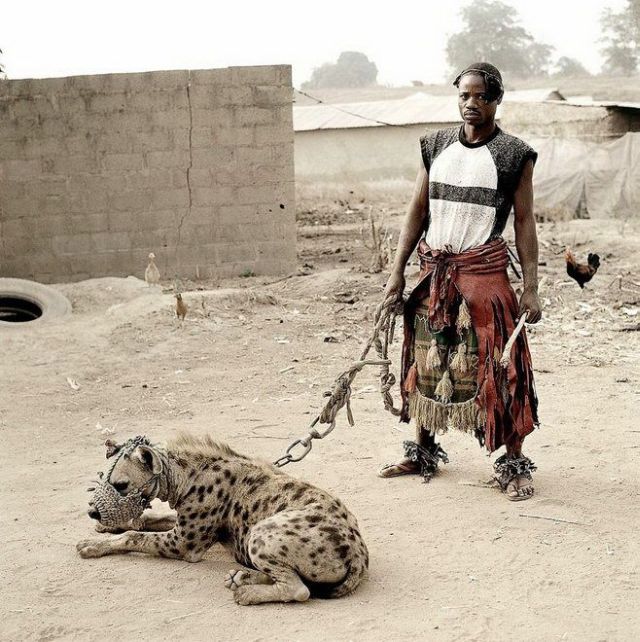
    Pet ownership also isn't a first world luxury.:


    I'd also question the stand alone industry size of pet service compared to yachts (cause its all about the jobz!!1!).
    Last edited by Ominous Gamer; 03-15-2011 at 12:02 PM.
    "In a field where an overlooked bug could cost millions, you want people who will speak their minds, even if they’re sometimes obnoxious about it."

  15. #15
    Look Ominous, you're likely displaying the same problem I've pointed out numerous times before. You see me say something, and automatically trace-out a deeper physiological profile of me that happens to be based on a factual error.

    The reason I've been thinking of this issue is that, while my mother is semi-retired, she is still doing paid consulting for a few major New York-area animal shelters. I was helping her re-jigger some of her spreadsheets yesterday on Google Docs, then saw that article which prompted me to start this.

    Thank you for finally bringing up the medical costs, I was waiting for someone to do that (Wiggin surprisingly missed that). If people can't afford the tax, I don't suppose they can afford the medical costs that are often stunningly high. Ever pay for a $400 treatment + medicine for a Guinea Pig? Which brings us back to this issue of where pets stand on the priority chain of our society. If people are as ignorant as you say they are about the long-term costs of pet ownership, we should make it harder for them to get pets, non?

  16. #16
    Stingy DM Veldan Rath's Avatar
    Join Date
    Jan 2010
    Location
    Maine! And yes, we have plumbing!
    Posts
    3,064
    So my 60 vet bill for a check up would become 120?

    Just because YOU don't see the value of pets?

    Douche.
    Brevior saltare cum deformibus viris est vita

  17. #17
    Quote Originally Posted by Dread
    Thank you for finally bringing up the medical costs, I was waiting for someone to do that (Wiggin surprisingly missed that). If people can't afford the tax, I don't suppose they can afford the medical costs that are often stunningly high. Ever pay for a $400 treatment + medicine for a Guinea Pig? Which brings us back to this issue of where pets stand on the priority chain of our society. If people are as ignorant as you say they are about the long-term costs of pet ownership, we should make it harder for them to get pets, non?
    I'm not getting why medical costs are important here. They're just upkeep, like any other expensive good (including yachts!). We don't means test people to make sure they can afford upkeep for other goods. Oh, I can see a potential moral argument, saying cruelty to animals should be illegal and withholding medical care is cruelty, but that argument wouldn't be driven by economics but rather morality.

    Let's be honest with ourselves; there's nothing really special about pets compared to any other luxury good. They can detract from common goods, so obviously should be regulated to some extent, but not in some particularly insidious manner. There are far better ways to deal with our food problems than getting rid of pets; I have yet to see a worthwhile argument from you about why pets should be somehow special in this regard.

  18. #18
    Quote Originally Posted by Dreadnaught View Post
    Ever pay for a $400 treatment + medicine for a Guinea Pig? Which brings us back to this issue of where pets stand on the priority chain of our society. If people are as ignorant as you say they are about the long-term costs of pet ownership, we should make it harder for them to get pets, non?
    You've got a disconnect here. People know of the risk of high priced ownership, but its not the norm. Yes, I've paid $300 to have a hamster's jaw wired, and it still died. But thats hardly an upkeep cost, its an extreme, and people bet against catastrophic events like that happening. Using your reasoning, we should restrict people from getting sick, getting old, having children, owning homes or cars, or basically anything thats expensive, can get expensive, or cause expensive damage.
    On the flip side I've got 3 cats that haven't been to the vet for anything besides a $10 deworming pill.

    You can't fix stupid, thats obvious, but doubling the cost of pet ownership isn't going to fix anything. Its only going to hurt those that need/want the companionship (and they don't always fit the ignorant or stupid description), and the animals since you're mainly going to chase it all underground.


    Find it kind of shallow that out of all the things I pointed out you were wrong about, the only point you tried to defend was the medical expense.
    Last edited by Ominous Gamer; 03-15-2011 at 07:16 PM.
    "In a field where an overlooked bug could cost millions, you want people who will speak their minds, even if they’re sometimes obnoxious about it."

  19. #19
    Instead of a tax, how 'bout a tax credit for showing up to the vet and making sure your pet is healthy?

  20. #20
    Quote Originally Posted by Lewkowski View Post
    Dread every time I think you might actually be turning into a right thinking freedom loving individual you have to post crap like this.
    Yeah Dread, do you hate your country?

    DO YOU? DO YOU HATE YOUR COUNTRY ?!


    ~
    Quote Originally Posted by Steely Glint View Post
    It's actually the original French billion, which is bi-million, which is a million to the power of 2. We adopted the word, and then they changed it, presumably as revenge for Crecy and Agincourt, and then the treasonous Americans adopted the new French usage and spread it all over the world. And now we have to use it.

    And that's Why I'm Voting Leave.

  21. #21
    What a load of pishtwaddle.

    There isn't a single argument there that can't be made more about children.

    My vote: we introduce a 100% sales tax on children's clothing, free education and abolish any child support. If you're wealthy enough to have kids then you can afford those.
    Spoiler:
    Reductio ad absurdium

  22. #22
    Quote Originally Posted by Dreadnaught View Post
    It's not just the pet stores though. It's not as if getting a pet from a shelter mitigates the issue of lots of animals being created for domestic amusement.
    No, the problem of organic life propagating mitigates your attempted control mechanism.
    Last night as I lay in bed, looking up at the stars, I thought, “Where the hell is my ceiling?"

  23. #23
    Quote Originally Posted by RandBlade View Post
    What a load of pishtwaddle.

    There isn't a single argument there that can't be made more about children.

    My vote: we introduce a 100% sales tax on children's clothing, free education and abolish any child support. If you're wealthy enough to have kids then you can afford those.
    Spoiler:
    Reductio ad absurdium
    Actually, while I agree Dread's argument is pretty bunk, I think there are clearly economic benefits to having children that don't accrue for having pets.

  24. #24
    Is there an equivalent to people health insurance intended for pet health care in the U.S.?

    Quote Originally Posted by wiggin View Post
    Actually, while I agree Dread's argument is pretty bunk, I think there are clearly economic benefits to having children that don't accrue for having pets.
    Outside an agrarian society? Can you flesh this thought out a little?
    In the future, the Berlin wall will be a mile high, and made of steel. You too will be made to crawl, to lick children's blood from jackboots. There will be no creativity, only productivity. Instead of love there will be fear and distrust, instead of surrender there will be submission. Contact will be replaced with isolation, and joy with shame. Hope will cease to exist as a concept. The Earth will be covered with steel and concrete. There will be an electronic policeman in every head. Your children will be born in chains, live only to serve, and die in anguish and ignorance.
    The universe we observe has precisely the properties we should expect if there is, at bottom, no design, no purpose, no evil, no good, nothing but blind, pitiless indifference.

  25. #25
    Quote Originally Posted by Nessus View Post
    Is there an equivalent to people health insurance intended for pet health care in the U.S.?


    Outside an agrarian society? Can you flesh this thought out a little?
    Yes there is. Not going to look up the specifics, but I have seen it advertised in pet stores. Also, this entire arguement is absurd, if you find pet ownership absurd then don't have any pets. But don't think to punish those that find value in their pets, be it emotional/psychological or whatever. On a side note, guinea pigs are stupid pets
    The worst job in the world is better than being broke and homeless

  26. #26
    Don't guinea pigs engage in random cannibalism? That sounds like cool pets to me!
    In the future, the Berlin wall will be a mile high, and made of steel. You too will be made to crawl, to lick children's blood from jackboots. There will be no creativity, only productivity. Instead of love there will be fear and distrust, instead of surrender there will be submission. Contact will be replaced with isolation, and joy with shame. Hope will cease to exist as a concept. The Earth will be covered with steel and concrete. There will be an electronic policeman in every head. Your children will be born in chains, live only to serve, and die in anguish and ignorance.
    The universe we observe has precisely the properties we should expect if there is, at bottom, no design, no purpose, no evil, no good, nothing but blind, pitiless indifference.

  27. #27
    Quote Originally Posted by Nessus View Post
    Outside an agrarian society? Can you flesh this thought out a little?
    I don't mean personal benefits to the parents (though one can always make that argument, it matters less today than it used to). I mean the net macroeconomic benefits of having children. These are very clear; you really need fertility levels at least at replacement (and ideally higher) if you want to have a decent number of workers supporting the older generations. It's not just social safety nets either - senior citizens are much bigger savers which can lead to deflation if there are too few younger people (very bad for the economy), etc, etc. There are a lot of demographic trends in economics that generally favor having more children. This is why countries with low fertility for one reason or another (Japan, China, S. Korea, much of E. Europe and parts of W. Europe, Russia, etc.) are facing long-term demographic and macroeconomic problems - low dependency ratios are not good. This can be partially offset by immigration, but only partially.

    More broadly, of course, you can just look at the population growth rate rather than fertility rates, but fertility is the main engine of growth in population. This is probably going to shift eventually; world population is looking to stabilize around 2050, and after that individual countries will probably be competing more for migrant flows rather than fertility, although obviously there will still be quite a lot of variation from country to country. There's also a way around this; a few countries don't fit into the classic demographic-economic paradox, where increasing development decreases fertility. Israel and Saudi Arabia are two prime examples; the US and a few others are less dramatic ones.

  28. #28
    Ohh, I'm sorry, I thought you meant for the parents themselves.
    In the future, the Berlin wall will be a mile high, and made of steel. You too will be made to crawl, to lick children's blood from jackboots. There will be no creativity, only productivity. Instead of love there will be fear and distrust, instead of surrender there will be submission. Contact will be replaced with isolation, and joy with shame. Hope will cease to exist as a concept. The Earth will be covered with steel and concrete. There will be an electronic policeman in every head. Your children will be born in chains, live only to serve, and die in anguish and ignorance.
    The universe we observe has precisely the properties we should expect if there is, at bottom, no design, no purpose, no evil, no good, nothing but blind, pitiless indifference.

  29. #29
    Quote Originally Posted by Nessus View Post
    Ohh, I'm sorry, I thought you meant for the parents themselves.
    Nah, though I've heard that argument made. Dread's broader argument seemed to be that pets were a net drag on society, particularly food stocks, and as such any marginal benefit for their owners doesn't counterbalance their downsides from a societal level. Extending that to children implies that children are in general bad for society whether or not they provide some small benefit for parents. This is patently false.

    Now, I think the argument can still be made that parents benefit from children. There's the obvious economic arguments: social safety nets aren't that great, and it helps to have free help in your old age in dealing with various infirmities (and potentially poverty). That being said, it's probably cheaper just to hire someone when you're old to help you out (and save any money you would have spent on the kids so you don't run out of money in retirement). Also, some studies seem to indicate that parents exaggerate the benefits of having kids, which is probably justifying expensive decisions they've already made.

    Of course, being an old, lonely person might be offset by adorable, doting grandchildren or great-grandchildren, but that's more of a subjective argument.

  30. #30
    Studies also indicate that people of the same age without kids are happier than the ones with kids until the children are more or less out of the nest. I'm going to hazard a guess that pet-minded people with pets are happier than pet-minded people without pets. But that's hardly something to base taxation policy on.

    It's kind of absurd to say pets are a drag on food stocks when we throw away a huge segment of our produced food because it expires before consumers consume it. The production itself is wasteful, not where it ends up.
    In the future, the Berlin wall will be a mile high, and made of steel. You too will be made to crawl, to lick children's blood from jackboots. There will be no creativity, only productivity. Instead of love there will be fear and distrust, instead of surrender there will be submission. Contact will be replaced with isolation, and joy with shame. Hope will cease to exist as a concept. The Earth will be covered with steel and concrete. There will be an electronic policeman in every head. Your children will be born in chains, live only to serve, and die in anguish and ignorance.
    The universe we observe has precisely the properties we should expect if there is, at bottom, no design, no purpose, no evil, no good, nothing but blind, pitiless indifference.

Posting Permissions

  • You may not post new threads
  • You may not post replies
  • You may not post attachments
  • You may not edit your posts
  •